Today On The Eric Metaxas Show, Eric talks with Roger Kimball about New York City, Islam, and why they argue the West is losing civilizational confidence. They discuss whether the Islam vs Islamism distinction holds up, why assimilation and shared values matter for a free society, and what is happening in Europe and England right now. Then they pivot to Iran, regime change predictions, and why they believe Trump is reshaping the global order from the border to energy to foreign policy.
-
How Political Correctness Hijacked the Arts | Roger Kimball and Heather MacDonald

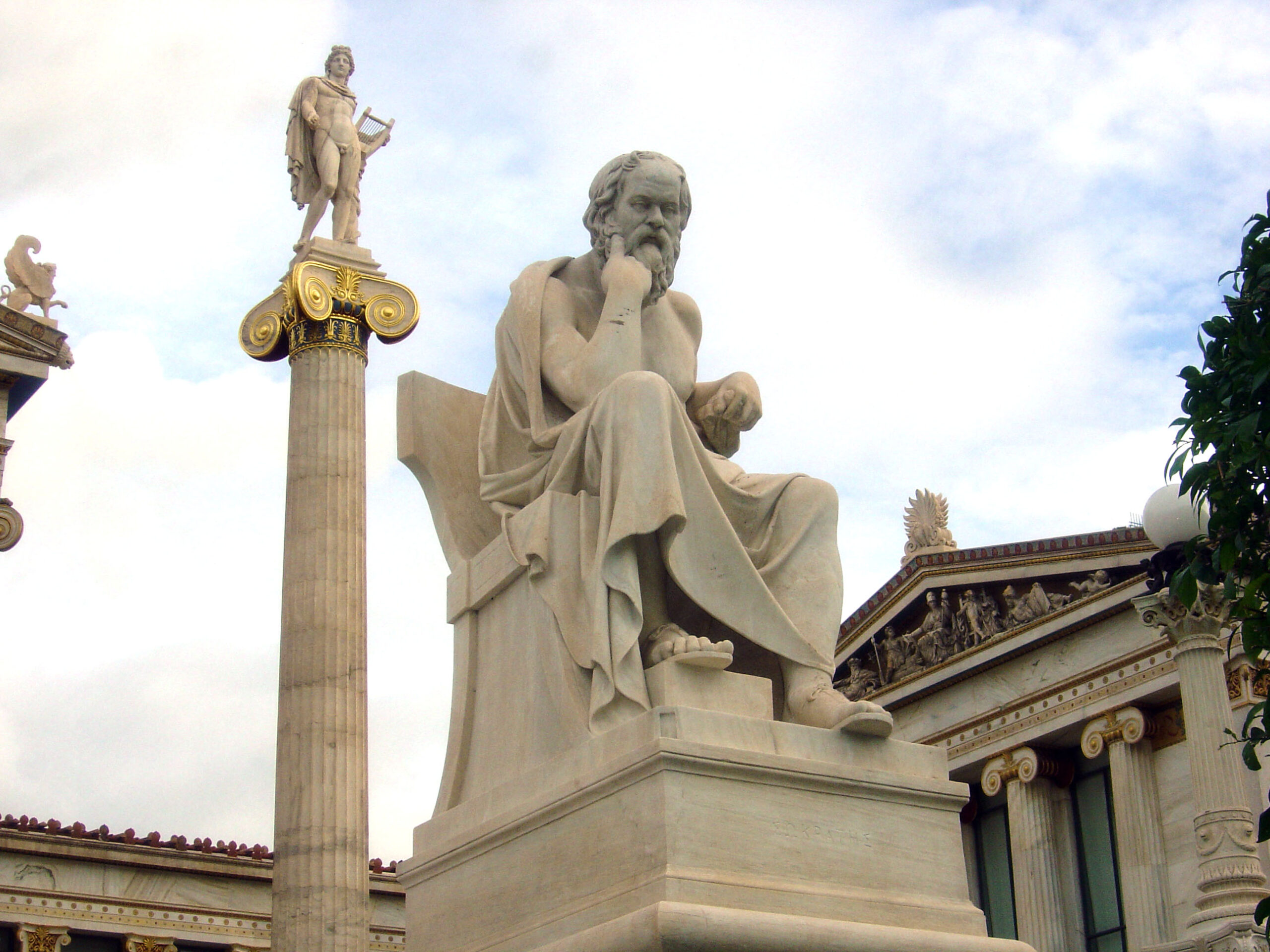
What gets to be called art — and who decides? In this wide-ranging Socrates Dialogues conversation, New York–based thinkers, writers, and art admirers Heather Mac Donald and Roger Kimball explore the definition of art and the history of the unmaking of beauty in modern contemporary art. Drawing on examples from Duchamp, Warhol, Serrano, Hirst, and others, the two discuss how the banal, the transgressive, and the political have reshaped the aesthetic experience of art, often robbing it of spiritual resonance.
-
Populism, X: The Imperative of Freedom
It is curious how certain words accumulate a nimbus of positive associations while others, semantically just as innocuous, wind up shouldering a portfolio of bad feelings.
Consider the different careers of the terms “democracy” and “populism.”
Do you know any responsible person who would admit to being opposed to democracy? No one who does not enjoy a large private income would risk it. But lots of people are willing to declare themselves anti-populist. The discrepancy is curious for several reasons.
It was not at all clear, Madison thought, that democracy was a reliable custodian of liberty.
For one thing, it is a testament to the almost Darwinian hardiness of the word “democracy.” In the fierce struggle among ideas for survival, “democracy” has not only survived but thrived. This is despite the fact that political thinkers from Plato and Aristotle through Cicero and down to modern times have been deeply suspicious of democracy. Aristotle thought democracy the worst form of government, all but inevitably leading to ochlocracy or mob rule, which is no rule.
In Federalist 10, James Madison famously warned that history had shown that democratic regimes have “in general been as short in their lives as they have been violent in their deaths.” “Theoretic politicians,” he wrote—and it would be hard to find a more contemptuous deployment of the word “theoretic”—such politicians may have advocated democracy, but that is only because of their dangerous and utopian ignorance of human nature. It was not at all clear, Madison thought, that democracy was a reliable custodian of liberty.
Nevertheless, nearly everyone wants to associate himself with the word “democracy.” Totalitarian regimes like to describe themselves as the “Democratic Republic” of wherever. Conservatives champion the advantages of “democratic capitalism.” Central planners of all stripes eagerly deploy programs advertised as enhancing or extending “democracy.” Even James Madison came down on the side of a subspecies of democracy, one filtered through the modulating influence of a large, diverse population and an elaborate scheme of representation that softened (Madison said “excluded”) the influence of “the people in their collective capacity.”
“Democracy,” in short, is a eulogistic word, what the practical philosopher Stephen Potter in another context apostrophized as an “OK word.” And it is worth noting, as Potter would have been quick to remind us, that the people pronouncing those eulogies delight in advertising themselves as, and are generally accepted as, “OK people.” Indeed, the class element and the element of moral approbation—of what some genius has summarized as “virtue signaling”—are key.
It is quite otherwise with “populism.” At first blush, this seems odd because the word “populism” occupies a semantic space closely adjacent to “democracy.” “Democracy” means “rule by the demos,” the people. “Populism,” according to The American Heritage Dictionary, describes “A political philosophy directed to the needs of the common people and advancing a more equitable distribution of wealth and power”— that is, just the sorts of things that the people, were they to rule, would seek.
But the fact is that “populism” is ambivalent at best. Sometimes, it is true, a charismatic figure can survive and even illuminate the label “populist” like a personal halo. Bernie Sanders managed this trick among the eco-conscious, racially omnivorous, non-gender-stereotyping, anti-capitalist beneficiaries of capitalism who made up his core constituency.
But it was always my impression that in this case the term “populist” was fielded less by Sanders or his followers than by his rivals and the media in an effort to fix him in the public’s mind as one of the many lamentable examples of not-Hillary, who herself was presumed to be popular though not populist.
There are at least two sides to the negative association under which the term “populist” struggles. On the one hand, there is the issue of demagoguery. Some commentators tell us that “populist” and “demagogue” are essentially synonyms (though they rarely point out that demagogos simply meant “a popular leader,” e.g., Pericles). The association of demagoguery and populism describes what we might call the command-and-control aspect of populism. The populist leader is said to forsake reason and moderation in order to stir the dark, chthonic passions of a semi-literate and spiritually unelevated populace.
On the other hand, there is the issue of the fertile but unedifying soil of that populace upon which the demagogic leader works. Anyone who has looked at the commentary on Brexit, the campaign and early months of the Trump administration, or the recent French election will have noted this.
Consider, to take but one example, how often the word “anger” and its cognates are deployed to evoke the psychological and moral failings of both the populist multitude and its putative leaders. In a remarkable, apocalyptic effusion published in the early hours of November 9, 2016, David Remnick, the editor of The New Yorker, warned that the Trump presidency represented “a rebellion against liberalism itself,” an “angry assault” on the civil rights of women, blacks, immigrants, homosexuals, and countless others. Later commentators warned about our “angry, cynical times,” the “raw, angry and aggrieved” tone of Trump’s rhetoric, the unchaperoned “anger” of Americans who felt they “had been left behind.” “Trump’s Anger Could Lead Down a Dangerous Road,” quoth cnn. “Inside Trump’s Anger and Impatience—and His Sudden Decision to Fire Comey,” The Washington Post. “How Festering Anger at Comey Ended in His Firing,” The New York Times.
There are occasional acknowledgments that the diagnosed “anger” may be understandable, even justified. But we are left with the unmistakeable impression that the phenomenon as a whole is something vicious and irrational. Anger “festers.” It leads to “sudden,” i.e., impulsive decisions. The road it steers us toward could be “dangerous.” (Ah, how cheap is possibility: when we read that “could be” dangerous, do we also think, as we should, that it might just as well not be?)
Populism seems incapable of escaping the association with demagoguery and moral darkness. Like the foul-smelling wounds of Philoctetes, the stench is apparently incurable. Granted, there are plenty of historical reasons for the association between demagoguery and populism, as such names as the brothers Tiberius and Gaius Gracchus, Father Coughlin, and Huey Long remind us.
Populism seems incapable of escaping the association with demagoguery and moral darkness.
Still, I suspect that in the present context the apparently unbreakable association between populism and demagoguery has less to do with any natural affinity than with cunning rhetorical weaponization. “Populism,” that is to say, is wielded less as a descriptive than as a delegitimizing term. Successfully charge someone with populist sympathies and you get, free and for nothing, both the imputation of demagoguery and what was famously derided as a “deplorable” and “irredeemable” cohort. The element of existential depreciation is almost palpable.
So is the element of condescension. Inseparable from the diagnosis of populism is the implication not just of incompetence but also of a crudity that is part aesthetic and part moral. Hence the curiously visceral distaste expressed by elite opinion for signs of populist sympathy. When Hillary Clinton charged that half of Donald Trump’s supporters were an “irredeemable” “basket of deplorables,” when Barack Obama castigated small-town Republican voters as “bitter” folk who “cling to guns or religion or antipathy to people who aren’t like them or anti-immigrant sentiment or anti-trade sentiment,” what they expressed was not disagreement but condescending revulsion.
Ithink I first became aware that the charge of populist sympathies could have a powerful political, moral, and class delegitimizing effect when I was in London last June to cover the Brexit vote. Nearly everyone I met, from Tory ministers to taxi drivers, from tourists to tradesmen, was a Remainer. The higher up the income and class scale you went, the more likely it was that your interlocutor would be in favor of Britain’s remaining in the European Union. And the more pointed would be his disparagement of those arguing in favor of Brexit. The Brexiteers were said to be “angry,” yes, but also ignorant, fearful, xenophobic, and racist.
Except that they weren’t, not the ones I met, anyway. For them, Brexit turned on a simple question: “Who rules?” Is the ultimate source of British sovereignty Parliament, as had been the case for centuries? Or is it Brussels, seat of the European Union?
The question of sovereignty, I believe, takes us to the heart of what in recent years has been touted and tarred as the populist project.
Consider Britain. Parliament answers to the British voters. The European Union answers to—well, to itself. Indeed, it is worth pausing to remind ourselves how profoundly undemocratic is the European Union. Its commissioners are appointed, not elected. They cannot be turned out of office by voters. If the public votes contrary to the wishes of the E.U.’s commissars in a referendum, they are simply presented with another referendum until they vote the “right” way. The E.U.’s financial books have never been subject to a public audit. The corruption is just too widespread. Yet the E.U.’s agents wield extraordinary power over the everyday lives of their charges. A commissioner in Brussels can tell a property owner in Wales what sort of potatoes he may plant on his farm, how he must calculate the weight of the products he sells, and whom he must allow into his country. He can outlaw “racism” and “xenophobia”—defined as harboring “an aversion” to people based on “race, colour, descent, religion or belief, national or ethnic origin” and specify a penalty of “at least” two years’ imprisonment for infractions. He can “lawfully suppress,” as the London Telegraph reported, “political criticism of its institutions and of leading figures,” thus rendering the commissars of the E.U. not only beyond the vote but also beyond criticism.
It’s a little different in the United States. I’ll come to that below. At the moment, it is worth noting to what extent the metabolism of this political dispensation was anticipated by Alexis de Tocqueville in his famous passages about “democratic despotism” in Democracy in America. Unlike despotism of yore, Tocqueville noted, this modern allotrope does not tyrannize over man—it infantilizes him. And it does this by promulgating ever more cumbersome rules and regulations that reach into the interstices of everyday life to hamper initiative, stymie independence, stifle originality, homogenize individuality. This power, said Tocqueville, “extends its arms over society as a whole.”
It does not break wills, but it softens them, bends them, and directs them; it rarely forces one to act, but it constantly opposes itself to one’s acting; it does not destroy, it prevents things from being born; it does not tyrannize, it hinders, compromises, enervates, extinguishes, dazes, and finally reduces each nation to being nothing more than a herd of timid and industrious animals of which the government is the shepherd.
Tocqueville’s analysis has led many observers to conclude that the villain in this drama is the state. But the political philosopher James Burnham, writing in the early 1940s in The Managerial Revolution, saw that the real villain was not the state as such but the bureaucracy that maintained and managed it. It is easy to mock the apparatchiks who populate the machinery of government. Thus James H. Boren writes wickedly that “the noblest of all of man’s struggles are those in which dedicated bureaucrats, armed with the spirit of dynamic inaction, have fought to protect the ramparts of creative nonresponsiveness from the onslaughts of mere citizens who have demanded action in their behalf.” But the comic potential of the morass should not blind us to the minatory nature of the phenomenon. Indeed, it presents a specimen case of the general truth that the preposterous and the malevolent often co-mingle. The shepherd of which Tocqueville wrote was really a flock of shepherds, a coterie of managers who, in the guise of doing the state’s business, prosecuted their own advantage and gradually became a self-perpetuating elite that arrogated to itself power over the levers of society.
Anatomizing this sleight-of-hand is at the center of “James Burnham’s Managerial Elite,” Julius Krein’s essay in the inaugural issue of American Affairs. “Although the managerial elite uses the state as an instrument to acquire power,” Krein notes, “the real enemy is not the state but rather the managerial separation of political and economic power from the liberal social contract.”
This separation of the real power of society from the economy and political life renders the managerial elite all but untouchable. And this, as Burnham saw, was the property neither of liberalism nor of conservatism but rather of anterior forces that engulfed both. “The contradiction of contemporary conservatism,” Krein writes,
is that it is an attempt to restore the culture and politics of bourgeois capitalism while accelerating the economy of managerialism. Because of its failure to recognize this contradiction, “much of conservative doctrine is, if not quite bankrupt, more and more obviously obsolescent,” as Burnham wrote in 1972. Since then it has only evolved from obsolescent to counterproductive. At this point, expanding “free markets” no longer has anything to do with classical American capitalism. It is simply the further emancipation of the managerial elite from any obligations to the political community. Likewise, promoting democracy as an abstract, universalist principle only undermines the sovereignty of the American people by rejecting national interests as a legitimate ground of foreign policy.
Sovereignty, Burnham saw, was shifting from Parliaments to what he called “administrative bureaus,” which increasingly are the seats of real power and, as such, “proclaim the rules, make the laws, issue the decrees.” As far back as the early 1940s, Burnham could write that “ ‘Laws’ today in the United States . . . are not being made any longer by Congress, but by the nlrb, sec, icc, aaa, tva, ftc, fcc, the Office of Production Management (what a revealing title!), and the other leading ‘executive agencies.’ ” And note that Burnham wrote decades before the advent of the epa, hud, cfpb, fsoc, the Department of Education, and the rest of the administrative alphabet soup that governs us in the United States today.
Iam convinced that the issue of sovereignty, of what we might call the location of sovereignty, has played a large role in the rise of the phenomenon we describe as “populism” in the United States as well as Europe. For one thing, the question of sovereignty, of who governs, stands behind the rebellion against the political correctness and moral meddlesomeness that are such conspicuous and disfiguring features of our increasingly bureaucratic society. The smothering, Tocquevillian blanket of regulatory excess has had a wide range of practical and economic effects, stifling entrepreneurship and making any sort of productive innovation difficult.
A reassertion of independence.
But perhaps its deepest effects are spiritual or psychological. The many assaults against free speech on college campuses, the demand for “safe spaces” and “trigger warnings” against verbal or fashion-inspired “micro-aggressions” (Mexican hats, “offensive” Halloween costumes, etc.) are part of this dictatorship of political correctness. In The Road to Serfdom, Friedrich Hayek said that one of the “main points” of his argument concerned “the psychological change,” the “alteration of the character of the people,” that extensive government control brought in its wake. The alteration involves a process of softening, enervation, infantilization even: an exchange of the challenges of liberty and self-reliance—the challenges, that is to say, of adulthood—for the coddling pleasures of dependence. Max Weber spoke in this context of “Ordnungsmenschen,” men who had become increasingly dependent on an order imposed upon them from above. Breaking with that drift becomes more and more difficult the more habituated to dependence a people becomes. In this sense, what has been described as a populist upsurge against political correctness is simply a reassertion of independence, a reclamation of what turns out to be a most uncommon virtue, common sense.
The issue of sovereignty also stands behind the debate over immigration: indeed, is any issue more central to the question Who governs? than who gets to decide a nation’s borders and how a country defines its first person plural: the “We” that makes us who we are as a people?
Throughout his campaign, Donald Trump promised to enforce America’s immigration laws, to end so-called “sanctuary cities,” which advertise themselves as safe havens for illegal aliens (though of course they do not call them “illegal aliens”), and to sharpen vetting procedures for people wishing to immigrate to America from countries known as sponsors of terrorism.
The President sometimes overstated and not infrequently misstated his case. Semantic precision is not a Trumpian speciality. But political effectiveness may be. Behind the Sturm und Drang that greeted Trump’s rhetoric on immigration, we can glimpse two very different concepts of the nation state and world order. One view sees the world as a collection of independent sovereign countries that, although interacting with one another, regard the care, safety, and prosperity of their own citizens as their first obligation. This is the traditional view of the nation state. It is also Donald Trump’s view. It is what licenses his talk of putting “America First,” a concept that, pace the anti-Trump media, has nothing to do with Charles Lindbergh’s isolationist movement of the late 1930s and everything to do with fostering a healthy sense of national identity and purpose.
The alternative view regards the nation state with suspicion as an atavistic form of political and social organization. The nation state might still be a practical necessity, but, the argument goes, it is a regrettable necessity inasmuch as it retards mankind’s emancipation from the parochial bonds of place and local allegiance. Ideally, according to this view, we are citizens of the world, not particular countries, and our fundamental obligation is to all mankind.
This is the progressive view. It has many progenitors and antecedents. But none is more influential than “Perpetual Peace: A Philosophical Sketch,” a brief essay that Immanuel Kant published in 1795 when he was seventy-one. The burden of the essay is to ask how perpetual peace might be obtained among states. The natural condition of mankind, Kant acknowledges, is war. But with the advent of “enlightened concepts of statecraft,” mankind, he suggests, may be able to transcend that unfortunate habit of making war and live in perpetual (ewigen) comity.
Kant lists various conditions for the initial establishment of peace—the eventual abolition of standing armies, for example—and a few conditions for its perpetuation: the extension of “universal hospitality” by nations was something that caught my eye. Ditto “world citizenship.” “The idea of . . . world citizenship,” he says at the end of the essay, “is no high-flown or exaggerated notion. It is a supplement to the unwritten code of the civil and international law, indispensable for the maintenance of the public human rights and hence also of perpetual peace.”
It is one thing to declare war illegal; it is quite another to enforce that edict.
Kant makes many observations along the way that will be balm to progressive hearts. He is against “the accumulation of treasure,” for example, because wealth is “a hindrance to perpetual peace.” By the same token, he believes that forbidding the system of international credit that the British empire employed “must be a preliminary article of perpetual peace.” Credit can be deployed to increase wealth, ergo it is suspect. Kant says that all states must be “republican” in organization. By that he means not that they must be democracies but only that the executive and legislative functions of the state be distinguished. (Indeed, he says that democracy, “properly speaking,” is “necessarily a despotism” because in it the executive and legislative functions of governments are both vested in one entity, “the people.”) He looks forward to the establishment of a “league of nations” (Völkerbund), all of which would freely embrace a republican form of government.
It would be hard to overstate the influence of Kant’s essay. It stands behind such progressive exfoliations as Woodrow Wilson’s “Fourteen Points,” not least the final point that looked forward to the establishment of a League of Nations. You can feel its pulse beating in the singing phrases of the 1928 Kellogg-Briand Pact, which outlawed war. It is worth noting that among the initial fifteen signatories of that noble-sounding pact, along with the United States, France, and England, were Germany, Italy, and Japan. What does that tell us about the folly of trusting paper proclamations not backed up by the authority of physical force? It is one thing to declare war illegal; it is quite another to enforce that edict.
Kant’s essay also directly inspired the architects of the United Nations and, in our own day, the architects of the European Union and the battalions of transnational progressives who jettison democracy for the sake of a more-or-less nebulous (but not therefore un-coercive) ideal of world citizenship.
I would not care to wager on how many of the hysterics who congregated at airports across the country to protest Donald Trump’s effort to make the citizens of this country safer were students of Kant. Doubtless very few. But all were his unwitting heirs. “Universal hospitality”: how the protestors would have liked that! (Though to be fair to Kant, he did note that such hospitality “is not the right to be a permanent visitor.”) I have no doubt that the motivation of the protestors had many sources. But to the extent that it was based on a political ideal (and not just partisan posturing or a grubby bid for notoriety and power), the spirit of Kant was hovering there in the background.
Kant was not without a sense of humor. He begins his essay by noting that he took his title from a sign outside a Dutch pub. “Pax Perpetua” read the sign, and below the lettering was the image of a graveyard. Perhaps the universal perpetuity of death is the only peace that mankind may really look forward to. Kant clearly wouldn’t agree, but it was charming of him to acknowledge that the idea of a genuine perpetual peace for mankind might be regarded by many as nothing more than a “sweet dream” of philosophers.
What has been called the populist spirit aims to rouse us from that “sweet dream”—what James Madison might have called the “theoretic” reverie of the meddling class whose designs for our salvation always seem to involve the extension of their own power and prerogative. In this sense, the issue of sovereignty also stands behind the debates over the relative advantages and moral weather of “globalism” vs. “nationalism”—a pair of terms almost as fraught as “democracy” and “populism”—as well as the correlative economic issues of underemployment and wage stagnation. “Theoretic” politicians may advocate “globalism” as a necessary condition for free trade. But the spirit of local control tempers the cosmopolitan project of a borderless world with a recognition that the nation state has been the best guarantor not only of sovereignty but also of broadly shared prosperity. What we might call the ideology of free trade—the globalist aspiration to transcend the impediments of national identity and control—is an abstraction that principally benefits its architects. As R. R. Reno, the editor of First Things, pointed out in a recent Op-Ed for The New York Times, “Globalism poses a threat to the future of democracy because it disenfranchises the vast majority and empowers a technocratic elite.”
In the end, what James Burnham described as the “managerial revolution” is part of a larger progressive project. The aim of this project is partly to emancipate mankind from such traditional sources of self-definition as national identity, religious affiliation, and specific cultural rootedness, partly to perpetuate and aggrandize the apparatus that oversees the resulting dissolution. Burnham castigates this hypertrophied form of liberalism (what we might call “illiberal liberalism”) as “an ideology of suicide” that has insinuated itself into the center of Western culture. He acknowledges that the proposition may sound hyperbolic. “Suicide,” he notes, may seem “too emotive a term, too negative and ‘bad.’ ” But it is part of the pathology that Burnham describes that such objections are “most often made most hotly by Westerners who hate their own civilization, readily excuse or even praise blows struck against it, and themselves lend a willing hand, frequently enough, to pulling it down.” The issue, Burnham saw, is that modern liberalism has equipped us with an ethic too abstract and empty to inspire real commitment. Modern liberalism, he writes,
does not offer ordinary men compelling motives for personal suffering, sacrifice, and death. There is no tragic dimension in its picture of the good life. Men become willing to endure, sacrifice, and die for God, for family, king, honor, country, from a sense of absolute duty or an exalted vision of the meaning of history. . . . And it is precisely these ideas and institutions that liberalism has criticized, attacked, and in part overthrown as superstitious, archaic, reactionary, and irrational. In their place liberalism proposes a set of pale and bloodless abstractions—pale and bloodless for the very reason that they have no roots in the past, in deep feeling and in suffering. Except for mercenaries, saints, and neurotics, no one is willing to sacrifice and die for progressive education, medicare, humanity in the abstract, the United Nations, and a ten percent rise in Social Security payments.
In his view, the primary function of liberalism was to “permit Western civilization to be reconciled to dissolution,” to view weakness, failure, even collapse not as a defeat but “as the transition to a new and higher order in which Mankind as a whole joins in a universal civilization that has risen above the parochial distinctions, divisions, and discriminations of the past.”
What has been called “populism” is a visceral reaction against these forces of dissolution.
Around the time that Donald Trump took office, his chief strategist Steve Bannon said that his goal was to “deconstruct the administrative state.” The phrase “administrative state”—also called “the regulatory state” or “the deep state”—has lately floated into common parlance. In The Administrative Threat, the legal scholar Philip Hamburger describes it as “a state within a state,” a sort of parallel legal and political structure populated by unelected bureaucrats. This amorphous congeries of agencies and regulations has become, Hamburger argues, “the dominant reality of American governance,” intruding everywhere into economic and social life.
What has been called “populism” is a visceral reaction against forces of dissolution.
Article I of the Constitution vests all legislative power in Congress, just as Article III vests all judicial authority in the Court. The administrative state is a mechanism for circumventing both. As such, Hamburger argues, the administrative state operates outside the Constitution.
When the Constitution places all legislative powers in Congress, it gives Congress not only the power to make law but also the power to unmake it. And it thereby bars the executive from suspending or dispensing with the law. When the Constitution, moreover, places the judicial power in the courts and guarantees the due process of law, it precludes the executive from telling the courts not to apply the law, and prevents the courts from abandoning their own judgment about what the law requires.
Binding citizens not through Congressionally enacted statutes but through the edicts of the managerial bureaucracy, the administrative state is “all about the evasion of governance through law, including an evasion of constitutional processes and procedural rights.” Accordingly, Hamburger concludes, the encroaching activity of the administrative state represents “the nation’s preeminent threat to civil liberties.”
Hamburger draws an analogy between the behavior of the administrative state and the behavior of such despotic monarchs as James I, Charles I, and James II. Instead of persuading Parliament to repeal or revise a statute, the British king simply evaded its force by decreeing that some or all of his subjects were not subject to its strictures. His power was absolute not merely in the sense that it was all but unlimited but also in the sense that it was independent or outside of the law. Students of Latin will recall the Ablative Absolute, a construction in which an ablative phrase is absolutum, “loosened” from or independent of the main clause of a sentence. Hamburger shows how the growth of the administrative state represents an extralegal “revival of absolute power” in this sense, one that threatens to transform Constitutional rights and guarantees into mere “options” that the government bestows or withholds at its pleasure. “The evasion,” he notes, “thereby changes the very nature of procedural rights. Such rights traditionally were assurances against the government. Now they are but one of the choices for government in its exercise of power. Though the government must respect these rights when it proceeds against Americans in court, it has the freedom to escape them by taking an administrative path.”
Just as British kings in the seventeenth century evaded Parliament through such expedients as the Star Chamber and the exercise of royal prerogatives and royal waivers—what John Adams castigated as “those badges of domination called prerogatives”—so the administrative state today operates in violation of the Constitution and beyond the authority of Congress. Barack Obama decreed that certain politically unpalatable provisions of the Affordable Care Act not be enforced, and presto, they were not enforced, even though they were the law of the land. He instructed his Department of Justice to intervene to prevent Arizona and other states from enforcing certain aspects of immigration law. He even forced public institutions to accommodate self-declared “transgender” persons in the toilets of their choice; he connived with lawsuits punishing bakers and Catholic hospitals and hobby shops who chose not to join this week’s politically correct campaign for the sexually exotic. The Constitution may have vested all legislative power in Congress and entrusted all judicial power to the courts, but the administrative state sidesteps those requirements by erecting a parallel bureaucratic structure of enforcement and control.
The administrative state today operates in violation of the Constitution.
“Eighteenth-century Americans,” Hamburger notes, “assumed that a rule could have the obligation of law only if it came from the constitutionally established legislature elected by the people.” Today, Americans find their lives directed by a jumble of agencies far removed from the legislature and staffed by bureaucrats who make and enforce a vast network of rules that govern nearly every aspect of our lives.
One of the most disturbing aspects of Hamburger’s analysis is the historical connection he exposes between the expansion of the franchise in the early twentieth century and the growth of administrative, that is to say, extra-legal, power. For the people in charge, equality of voting rights was one thing. They could live with that. But the tendency of newly enfranchised groups—the “bitter clingers” and “deplorables” of yore—to reject progressive initiatives was something else again. As Woodrow Wilson noted sadly, “The bulk of mankind is rigidly unphilosophical, and nowadays the bulk of mankind votes.” What to do?
The solution was to shift real power out of elected bodies and into the hands of the right sort of people, enlightened people, progressive people, people, that is to say, like Woodrow Wilson. Thus Wilson welcomed the advent of administrative power as a counterweight to encroaching democratization. And thus it was, as Hamburger points out, that we have seen a transfer of legislative power to the “knowledge class,” the managerial elite that James Burnham anatomized.
A closer look at the so-called “knowledge class” shows that what it knows best is how to preserve and extend its own privileges. Its activities are swaddled in do-gooder rhetoric about serving the public, looking after “the environment,” helping the disadvantaged, etc., but what they chiefly excel at is consolidating their own power.
In Thoughts on the Cause of the Present Discontents (1770), Edmund Burke criticized the Court of George III for circumventing Parliament and establishing by stealth what amounted to a new regime of royal prerogative and influence-peddling. It was not as patent as the swaggering courts of James I or Charles I. George and his courtiers maintained the appearance of parliamentary supremacy. But a closer look showed that the system was corrupt. “It was soon discovered,” Burke wrote with sly understatement, “that the forms of a free, and the ends of an arbitrary Government, were things not altogether incompatible.” That discovery stands behind the growth of the administrative state. Under the cloak of democratic institutions, its essentially undemocratic activities pursue an expansionist agenda that threatens liberty in the most comprehensive way, by circumventing the law.
At the same time, however, a growing recognition of the totalitarian goals of the administrative state has fed what many have called a populist uprising here and in Europe. “Populist” is one word for the phenomenon. An affirmation of sovereignty, underwritten by a passion for freedom, is another, possibly more accurate, phrase.
-
The Left’s Never-Ending Outrage Machine
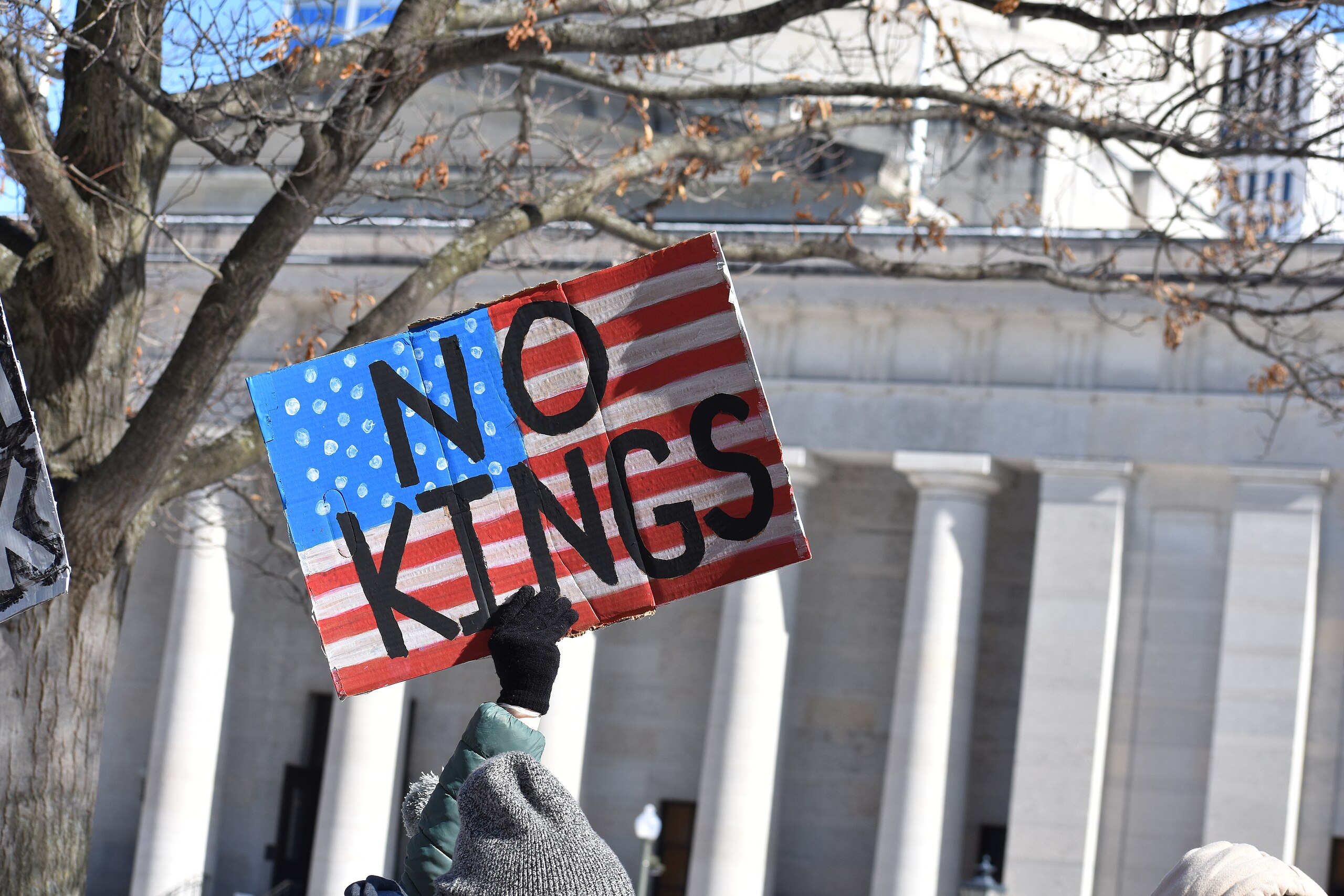
From “No Kings” tantrums to ballroom hysteria, Democrats’ endless outrage shows the same pattern—Trump leads, they react, and outrage is all they have left.
-
The Left’s Swift Shift After RFK Jr.’s Trump Endorsement
The thing I admire about contemporary deep-state Democrats is their nimbleness.
This nimbleness was on ostentatious view in the regime response to Robert F. Kennedy Jr.’s announcement Friday that he was 1) suspending his campaign (at least in battleground states) and 2) throwing his support behind Donald Trump.
The acrid scent of panic might have been expected among the limp-wristed, totalitarian faithful. And, in fact, beneath the amusing cologne of anti-Trump bluster, the panic was indeed discernible.
But there was also that trademark smooth-as-a-suppository (as Saul Bellow put it) suaveness, exemplified, for instance, by former Obama strategist David Axelrod.
“Robert F. Kennedy Sr.,” Axelrod posted shortly after the deed was done, “would have been appalled to see his son cut a deal to drop out for [t]he race and endorse Trump.”
Imagine: someone agrees to drop out of a race at the last minute and support a rival candidate! As the commentator Ned Ryan put it in response to Axelrod’s snippy post: “You suddenly seem offended by someone cutting a deal to drop out of the race and endorse someone else.”
Cast your mind back, David, to July 21 of this year. That’s when Joe Biden, having been made an offer he couldn’t refuse by the secret committee running the country, suddenly announced that he was dropping out of the race. This was, remember, after Biden repeatedly insisted that he was staying in the race and was looking forward to the next debate against Trump. Yes, the first was a disaster, but he would show ’em!
Biden’s missive, posted to his personal—not his official POTUS—account, bore all the earmarks of haste not to say coercion. Had someone actually dictated the text to him? We don’t know. But it was widely remarked that he neglected to endorse Kamala Harris. That came a few moments later in a separate post.
It is easy to forget what prodigious feats of political nimbleness were required to carry out this most delicate operation. First, the media and the party bosses had to stop mid-track and start marching in the opposite direction. On the morning of July 21, Joe Biden was “sharp as a tack.” By sundown, he was sadly diminished but also a brave hero for putting country before self and nobly bowing out of the race. The whole maneuver displayed an Olympics-level nimbleness.
So has the subsequent coronation of Kamala Harris. On the day before Biden’s defenestration, she was widely acknowledged to be a disliked, incompetent, airhead. The day after, she was hailed as the reincarnation of Winston Churchill.
As I have several times noted since the magic bus of Kamala’s supreme makeover got underway, the nimbleness of her canonization, though impressive, was the brittle project of magical thinking. It was like a hot-air balloon: eye-catching on ascent, intractable in flight, and dangerous when the air cooled and the plummet began.
As I and others observed, the ecstasy surrounding Kamala Harris on the run-up to the Democratic Convention was but a “sugar high,” a temporary state of intoxication that would be as short-lived as it was numbing.
The convention wasn’t over before strains of “the thrill is gone” could be heard beginning to echo in the chambers of the punditocracy.
By Thursday, the day that Kamala was to speak, it was beginning to be clear that her image as a great statesman-in-waiting was the closest thing to creatio ex nihilo since the events recounted in the opening chapters of Genesis.
This was something that Kennedy underscored in the course of his remarkable address Friday afternoon before joining Donald Trump at his rally in Arizona that evening. “[T]he DNC and its media organs engineered a surge of popularity for Vice President Harris based on nothing,” Kennedy said. “No policies, no interviews, no debates, only smoke and mirrors and balloons in a highly-produced circus.” Various Dems mentioned Trump 147 times from the stage on just the first day of their convention, while Republicans mentioned Joe Biden but twice over the course of their entire four-day event.. But “Who needs a policy,” Kennedy asked with calculated bile, “when you have Trump to hate?”
-
The Lessons of Culture
The lessons of culture: What are they?
One prominent lesson revolves around the recognition that we are living in the midst of one of those “plastic moments” that Karl Marx talked about.
To revise an old song: Will there always be an England?
That “will there always be …” is everywhere on our lips, in our hearts.
And it’s not just England we worry about.
The law, the economy, the political prospects, changes in our intellectual habits wreaked by changes in our technology, the destiny that is demography—the United States, the West, and indeed the entire world in the early years of the 21st century seem curiously unsettled.
Things we had taken for granted seem suddenly up for grabs in some fundamental if still-difficult-to-grasp way.
Fissures open among the confidences we had always assumed—in “the market,” in national identity, and in the basics of social order and cultural value.
The always hazardous art of cultural prognostication seems brittler now, more uneasy, more tentative.
Granted, the parochial assumption of present disruption is a hardy perennial.
As Edward Gibbon observed in “The Decline and Fall of the Roman Empire,” “there exists in human nature a strong propensity to depreciate the advantages, and to magnify the evils, of the present times.”
But we know from history (including the history that Gibbon gave us) that there are times when that natural propensity has colluded seamlessly with the actual facts.
Is there something unique, or at least distinctively different, about the economic crisis that began in 2008, that was supposed to have evaporated by now but that is lingering on if not getting worse?
Has the ideology of transnational progressivism made such inroads among political elites that it threatens American self-determination and individual liberty?
Is the United States on the brink (or even beyond the brink) of a “fourth revolution”—following on the original revolution of American Independence, the Civil War, and the revolution wreaked by President Franklin D. Roosevelt’s New Deal—are we, another 90 years on, facing a new revolution that will fundamentally reshape political and cultural life in this country?
The social commentator Charles Murray has asked: “[Can] a major stream of artistic accomplishment … be produced by a society that is geriatric [as ours, increasingly, is]? By a society that is secular? By an advanced welfare state?”
We do not know the answers to those questions, Mr. Murray observed, because “we are facing unprecedented situations.”
“We have never observed a great civilization with a population as old as the United States will have in the twenty-first century; we have never observed a great civilization that is as secular as we are apparently going to become; and we have had only half a century of experience with advanced welfare states,” he said.
Which leaves us where? In 1911, the poet-philosopher T.E. Hulme observed that “there must be one word in the language spelt in capital letters.”
“For a long time, and still for sane people, the word was God,” he said.
“Then one became bored with the letter ‘G,’ and went on to ‘R,’ and for a hundred years it was Reason, and now all the best people take off their hats and lower their voices when they speak of Life.”
I think Hulme was onto something, in his observation about the inveterate habit of reverence and the choice that sanity dictates.
I wonder, though, whether we as a culture haven’t shifted our attention from “L” for “Life” to “E” for “Egalitarianism” or “P” for “Political Correctness.”
It is noteworthy, in any event, to what extent certain key words live in a state of existential diminishment.
Consider the word “gentleman.”
It was not so long ago that it named a critical moral-social-cultural aspiration.
What happened to the phenomenon it named?
Or think of the word “respectable.”
It, too, has become what the philosopher David Stove called a “smile word,” that is, a word that names a forgotten or neglected or out-of-fashion social virtue that we might remember but no longer publicly practice.
The word still exists, but the reality has been ironized out of serious discussion.
It is hard to use straight. Just as it would be difficult to call someone “respectable” today without silently adding a dollop of irony, so it is with the word “gentleman.”
Leo Strauss made the witty observation that the word “virtue,” which once referred to the manliness of a man, had come to refer primarily to the chastity of a woman.
We’ve moved on from that, of course.
Chastity was for centuries a prime theme of Western dramatic art even as it was an obsession of Western culture.
Who can even pronounce the word these days without a knowing smile?
And as for manliness, well, the philosopher Harvey Mansfield wrote an entire book diagnosing (and lamenting) its mutation into ironized irrelevance.
Here’s the question: Absent the guiding stringencies of manliness, which are also the tonic assumptions of cultural confidence, how should we understand “the lessons of culture”?
In one of his essays on humanism, T.S. Eliot observed that when we “boil down Horace, the Elgin Marbles, St. Francis, and Goethe,” the result will be “pretty thin soup.”
“Culture,” he concluded, “is not enough, even though nothing is enough without culture.”
In other words, culture is more than a parade of names, a first prize in the game of “cultural literacy.”
Another lesson concerns the fragility of civilization.
As Evelyn Waugh noted in the dark days of the late 1930s, “barbarism is never finally defeated; given propitious circumstances, men and women who seem quite orderly will commit every conceivable atrocity.”
“The danger,” Waugh wrote, “does not come merely from habitual hooligans; we are all potential recruits for anarchy.”
He went on to warn: “The more elaborate the society, the more vulnerable it is to attack, and the more complete its collapse in case of defeat. At a time like the present it is notably precarious. If it falls we shall see not merely the dissolution of a few joint-stock corporations, but of the spiritual and material achievements of our history.”
It is a prime lesson of culture to acquaint us with those facts. Walter Bagehot wrote in “Physics and Politics,” his clear-eyed paean to liberal democracy, “History is strewn with the wrecks of nations which have gained a little progressiveness at the cost of a great deal of hard manliness, and have thus prepared themselves for destruction as soon as the movements of the world gave a chance for it.”
The moral is this: Culture is a precious inheritance, immeasurably more difficult to achieve than to destroy, and, once destroyed, almost irretrievable. It’s not at all clear that we have learned the lesson, though wise men from before the time of Pericles have sought to bring us that sobering news.
-
The Loire Valley Is the Place for Bargain Hunters
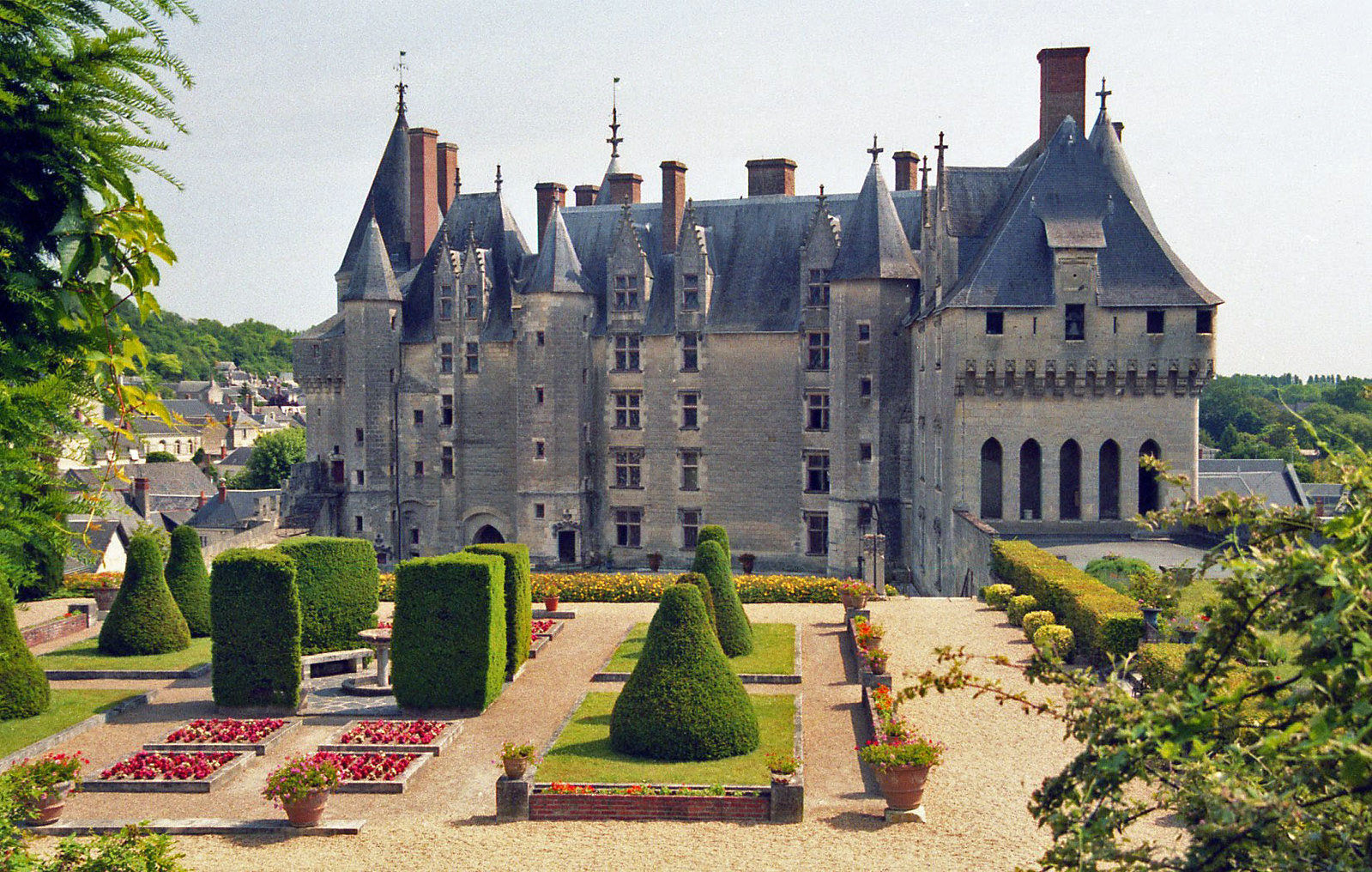
North of Cognac and Bordeaux, due west of Burgundy, the valley of the Loire River, attended on the second half of its journey east by the Cher River, stretches from the Pays Nantes and the Atlantic Ocean to Orléans in the heart of France. It is not quite right to say that this area is like Hamlet’s “undiscovered country from whose bourn no traveler returns,” but it’s my sense that Americans tend to overlook it in favor of its flashier neighbors. This is a pity, not only because the Loire Valley boasts lots of excellent wine, but also because the region still offers many conspicuous bargains, something you will look long and hard for in Bordeaux or Burgundy.
-
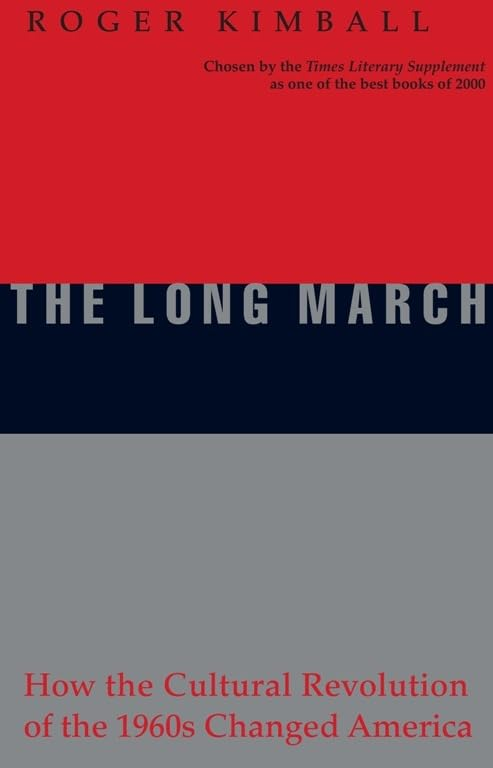
The Long March
Encounter Books, 2001
In The Long March, Roger Kimball, the author of Tenured Radicals, shows how the “cultural revolution” of the 1960s and ’70s took hold in America, lodging in our hearts and minds, and affecting our innermost assumptions about what counts as the good life. Kimball believes that the counterculture transformed high culture as well as our everyday life in terms of attitudes toward self and country, sex and drugs, and manners and morality. Believing that this dramatic change “cannot be understood apart from the seductive personalities who articulated its goals,” he intersperses his argument with incisive portraits of the life and thought of Allen Ginsberg, Norman Mailer, Timothy Leary, Susan Sontag, Eldridge Cleaver and other “cultural revolutionaries” who made their mark. For all that has been written about the counterculture, until now there has not been a chronicle of how this revolutionary movement succeeded and how its ideas helped provoke today’s “culture wars.” The Long March fills this gap with a compelling and well-informed narrative that is sure to provoke discussion and debate.
-
The Looming Lenin Comeback
The year 2024 marks the centenary of Vladimir Lenin’s death. In April of that year, the consummate communist, having blighted as many lives as he could, finally shuffled off his mortal coil, aged fifty-three.“That was young,” you may say. But I reply, “Not nearly young enough.”
-
The Madness of the Anti-AI Crowd
AI is not a departure from mankind’s toiling in the garden of natural knowledge but an extension of that knowledge.
-
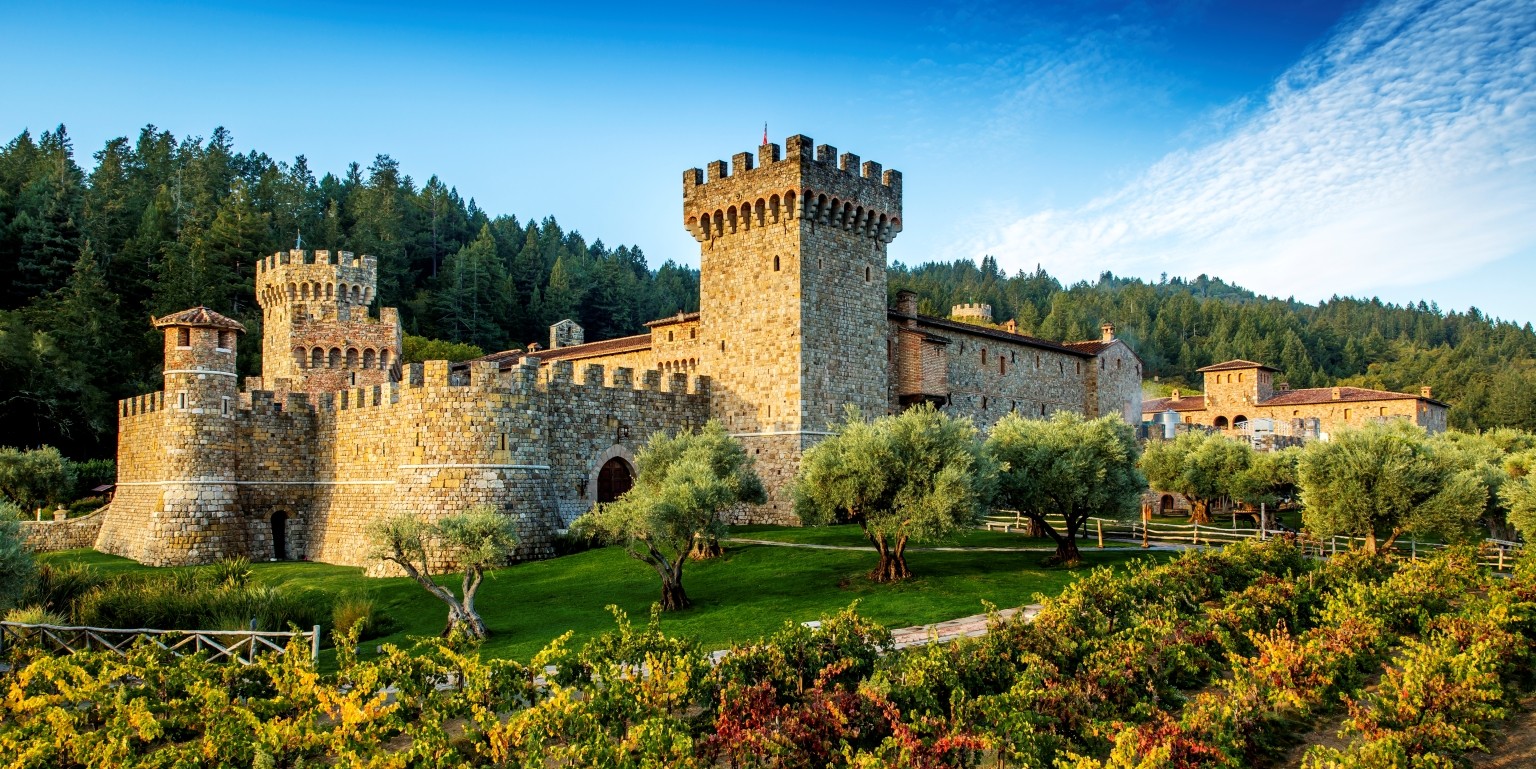
The Master Kyè
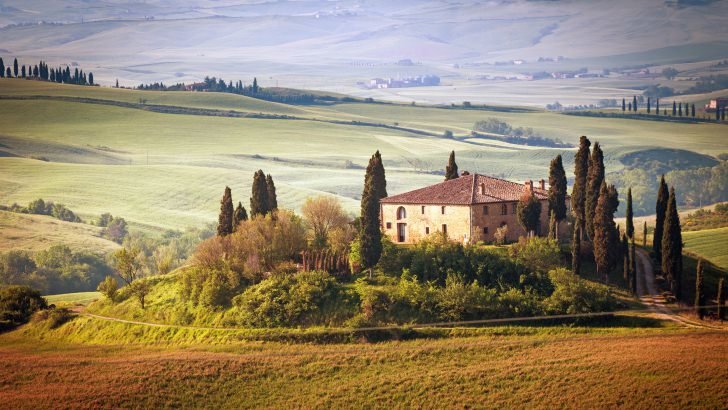
Last month we took a quick trip to Tuscany. Among the wines we sampled was Sassicaia, the fabled Cabernet blend from Bolgheri on the Tuscan coast. I said that the wine was an “instant sensation,” but an alert reader pointed out that it was only when it was sold commercially, in the late 1960s, that it took the wine world by storm. Before that, it was the private province of its creator, the marchese Mario Incisa della Rocchetta, who began experimenting with Bordeaux grapes in the 1940s. I also said that Tignanello was another superlative Super Tuscan from “the region.” But that same alert reader noted that while the region was Tuscany, Tignanello comes not from Bolgheri but from Chianti, several miles to the East.
-
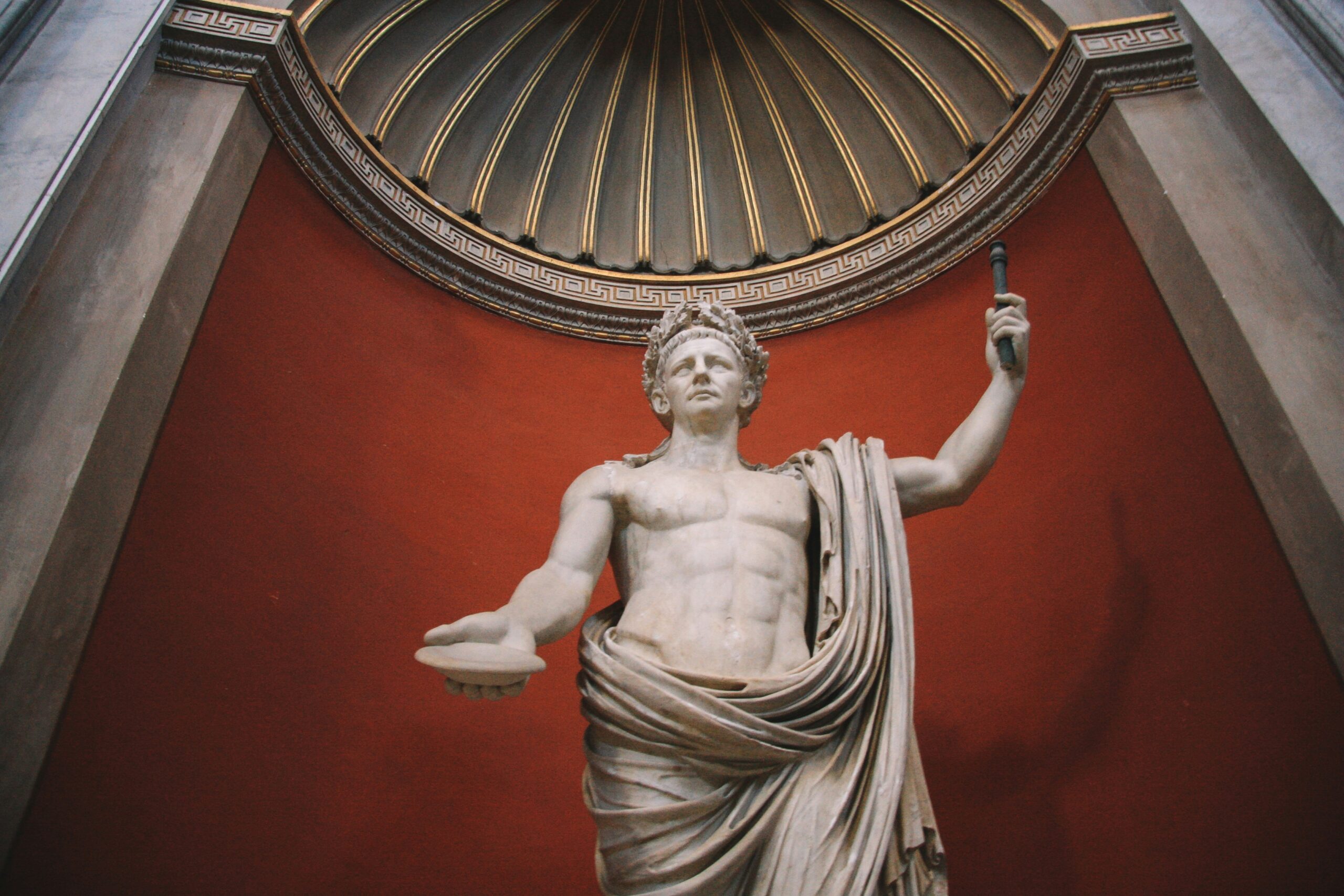
The Moral of Caesar
“No country was ever saved by good men,” Horace Walpole once observed, “because good men will not go to the length that may be necessary.”
I thought often of Walpole’s remark while reading Barry Strauss’s thrilling account of the assassination of Julius Caesar, which is full of robust men going to incarnadine lengths.1
“Thrilling” might seem hyperbolic for a serious work of history, which The Death of Caesar certainly is. But Barry Strauss is one of those rare academic historians—Victor Davis Hanson is another—who can make stories about the classical world seem as vivid as a fast-paced mystery novel. He did it a decade ago in his book about the naval battle of Salamis (480 BC), which, as his subtitle put it, saved not only Greece but also Western civilization. How different the world would have been if the Persians had won that engagement! He did it in his account of the Trojan War. And he did it most recently in Masters of Command, which compares the leadership qualities of Alexander the Great, Hannibal, and Julius Caesar.
Strauss continues the winning streak in his new book. Was the murder of Julius Caesar really “history’s most famous assassination”? Probably. You, Dear Reader, know all about the Ides of March. You know about “et tu, Brute,” the bad dreams of Caesar’s wife Calpurnia the night of March 14, and the soothsayer warning Caesar to beware. Amazing, isn’t it? You know quite a lot about what happened that fateful day around noon in 44 BC, more than two millennia past.
Doubtless a lot of what you know comes from Shakespeare’s play The Tragedy of Julius Caesar. Like Barry Strauss, Shakespeare knew how to tell a good story. Unlike Strauss, however, Shakespeare was not writing history, and his deployment of poetic license abounds. Caesar did not say “et tu, Brute.” Mark Antony, when he addressed the Roman people a day or two after Caesar’s death, did not begin: “Friends, Romans, countrymen.” And the other Brutus, Caesar’s close friend and protégé Decimus (whom Shakespeare calls Decius), played a much greater role in the conspiracy than in Shakespeare’s play.
Shakespeare got most of his details about the assassination from Plutarch (an English translation, based on a sixteenth-century French version of Plutarch’s Greek original, was published in 1579). Plutarch himself (45–120 AD) wrote more than a century after the event. Following Plutarch, Shakespeare makes Marcus Brutus his hero. “This was the noblest Roman of them all,” the Bard has Mark Antony say on hearing of Brutus’s suicide after the Battle of Philippi in 42 BC.
Maybe. Most of the American Founders thought so, too. Brutus was no doubt a man of parts. He read philosophy. He hailed from an ancient family (he liked to boast that he descended from the Brutus who, in 509 BC, sent packing Lucius Tarquinius Superbus, Rome’s hated last king, after his son raped Lucretia). And yet, as Barry Strauss shows, Brutus, like many Romans in the late Republic, was prepared to go to whatever length necessary not only to save his country but also to preserve his self-interest. Because of Shakespeare, Strauss observes, Brutus is “one of history’s most misunderstood characters.” Shakespeare presents him as a model of Republican virtue. Ancient sources paint a darker, more complicated picture. Brutus was courageous, yes, public-spirited, no doubt, but also “calculating, ungrateful, and ruthless.” Tidbit: About a decade before Philippi, when he was lieutenant governor in Cyprus, Brutus lent money to some people in one city at 48 percent per annum, four times the legal limit. When they refused to pay, he had the town councilmen locked in their council house until five of them starved. You see what Horace Walpole meant about going to the length necessary.
One of the great ironies surrounding the assassination of Julius Caesar is that, for all of the upheaval it occasioned, it failed utterly in its stated purpose. The conspirators sought to overthrow a dictator and restore the Republic. “The Republic,” “the Republic,” “the Republic”: that was the phrase they uttered ad nauseam. But the Roman Republic, devised to govern a city state, was overwhelmed by the cosmopolitan responsibilities of empire. By Caesar’s day, the Republic was a tottering and deeply corrupt edifice. As Caesar himself put it, cynically but not inaccurately, “The Republic is nothing, merely a name without body or shape.” By killing Caesar, the conspirators merely hastened the Republic’s collapse. Strauss quotes Emerson (who wasn’t wrong about everything): “When you strike at a king, you must kill him.” The assassins thought that by killing Caesar they had killed tyranny. They hadn’t. Removing Caesar did nothing to remove Caesarism, i.e., absolute rule by one man, which, as Strauss points out, emerged from the bloodbath of the Ides of March unscathed. “The world without Caesar,” he notes, “was still a world about Caesar.”
The Death of Caesar opens in August of 45 BC with Caesar returning to Italy victorious after the Battle of Munda, near modern-day Seville. (Philippi, Munda, Pharsalus, Brundisium, etc., etc. Unless you’re an expert, it’s hard to visualize where all these ancient places are. An indispensable aid is the Barrington Atlas of the Greek and Roman World.2 Exhaustively researched, meticulously rendered, these large-format maps of the ancient world are without peer.) As the Duke of Wellington said of Waterloo, Munda was a near-run thing. Caesar had to fight for his life right in the scrum of battle. But in the end he won in a rout. And with that victory, Caesar brought to an end the bloody civil war he had ignited in January 49 BC (November 50 by our calendar) when he crossed the Rubicon, the border between Cisalpine Gaul and Italy, with just one legion, the XIII, probably about 4,000 men. In the preceding decade, Caesar had subdued all Gaul (which, as everyone knows, is divided into three parts . . . ) and in so doing made himself one of the richest and most powerful men in Rome. Data point: one of Caesar’s many mistresses was Servilia Caepionis, one of the most powerful women in Rome. She was not only the mother of Marcus Brutus by her first husband but also the mother-in-law of the conspirator Cassius and half-sister of Caesar’s enemy Cato. Still, there is no evidence that she knew about the plot. Most of Caesar’s affairs—he seems to have gone in especially, though not exclusively, for married women—were short-lived escapades. His relationship with Servilia lasted on and off for decades. Caesar once gave her a black pearl costing 6 million sesterces, which, Barry Strauss calculates, was about 7,000 times the annual wage of the legionaries he led.
The spectacle of Caesar’s wealth and power, not least his control of many fanatically loyal legions in Gaul, was duly noted by his many rivals and enemies in the Roman Senate. Roman politics by the late Republic was a contest between two factions, the “optimates” or “best men,” wealthy aristocrats who had traditionally controlled the Senate, and the “populares,” who favored the people’s assemblies. These were not political parties but nodes of interest that Romans on their way up the career ladder catered to. Caesar, though he hailed from a minor patrician family, relied on and exploited the latter. He came by it naturally. His uncle, Gaius Marius (167–86 BC), the ambitious general and statesman who modernized the Roman army and opened it to landless citizens, was a vigorous proponent of the cause of the populares. He was also ruthless in suppressing his political enemies. On the other side was his younger rival, Lucius Sulla (138–78 BC), the general who revived the old institution of dictatorship and then set about purging his political enemies even more thoroughly than Marius had. The young Caesar barely escaped his wrath. “There’s many a Marius,” Sulla mused, “in Caesar.”
Between them, Marius and Sulla trampled on laws and conventions that had ruled the Roman Republic for centuries. It was illegal for a general to bring armed troops into the city proper. First Marius and then Sulla flouted this law and deployed their legions as a vigilante force, slaughtering their political opposition in Rome. They displayed the heads of their enemies, real and imagined, on the Rostra in the Forum, bloody reminders of the wages of civil war and an important marker in the dissolution of the Republic.
By the time Caesar entered politics, an uneasy order had been restored, but the rivalry between the optimates and the populares was still going strong. When Caesar’s term in Gaul ended in 50 BC, the Senate ordered him to leave his armies and return to Rome. Caesar faced a difficult decision. If he returned to Rome unarmed, he knew he would almost certainly face prosecution for various torts, real and fabricated. Would he do as the Senate demanded? Or would he brazen it out?
You know the answer. As always, Caesar brazened it out. But by bringing an army into Italy proper he violated the law. War was inevitable. Alea, as Caesar may or may not have said when he crossed the Rubicon, iacta est: the die is cast.
Born in 106 BC, Gnaeus Pompey was six years older than Caesar. His many youthful military successes—among other things, he rid the Mediterranean of pirates—earned him untrammeled popularity and the official nickname “Pompey the Great.” By lineage and conviction, Pompey was one of the optimates. But in 61 BC Pompey’s ambition led him into an alliance with Caesar and the immensely rich Marcus Crassus. This was the unofficial union known as the “First Triumvirate.” As always, Caesar was a busy man. He seduced both Mucia, Pompey’s third wife, and Tertulla, the wife of Crassus. If there were hard feelings, political expediency overcame them. Pompey divorced Mucia and, in 59, the year of Caesar’s consulship, married Julia, Caesar’s daughter. In some ways, Roman family life was as pliant as our own. Pompey, six years Caesar’s elder, thus became his rival’s son-in-law. Such arrangements might seem merely calculating, but they were not necessarily devoid of affection. Pompey was besotted with his bride, and the marriage helped to cement the new political union. But Julia died in childbirth in 54 and Pompey’s allegiance began to waver. Then Crassus, the third vir of the Triumvirate, blotted his copy book (and assured his own death) at the disastrous battle of Carrhae (in modern Turkey) in 53 BC, perhaps the biggest Roman defeat since Hannibal crushed the Roman army at Cannae in 216 BC. After Julia’s death, Caesar had offered Pompey the hand of his grandniece Octavia, sister of Octavius, the future Augustus. He refused. In 52, when he was also consul (Rome’s chief magistrate), Pompey instead married Cornelia Metella, the young widow of Crassus’s son Publius and daughter of Caecilius Metellus Scipio, another bitter enemy of Caesar. Now Pompey and much of the Roman old guard turned decisively against an ever more formidable Caesar. In 49, faced with Caesar’s growing army bearing down upon Rome, Pompey and most of the Senate fled the city, regrouped at Brundisium, down at Italy’s heel on the coast, and then made their way across the Adriatic to Epirus.
Caesar followed and picked off his opponents one by one. He shocked everyone by defeating the much larger army of Pompey at Pharsalus (in central Greece) in 48. He went on to Alexandria where he joined forces, and much else, with Cleopatra, producing a son familiarly known as Caesarion. Almost as an afterthought, Caesar defeated Pharnaces II at Zela (in Turkey) in 47. That campaign was concluded with such dispatch that Caesar could write to a friend in Rome the immortal words “Veni, Vidi, Vici.” It was his usual procedure. He cornered the hectoring Cato (not he of “Carthago delenda est”but his great-grandson) at Utica (in Northern Africa) in 46, whereupon Cato committed suicide, robbing Caesar of an opportunity for magnanimity.
Caesar could be cruel. Once, he ordered the hands of rebels in Gaul cut off and the appendages distributed across the country as a warning to others. Think again of Horace Walpole’s melancholy observation about good men not going “to the length that may be necessary.” But unlike Marius and Sulla, who executed their enemies wholesale, or Crassus and Pompey, who seemed to delight in wanton cruelty, Caesar cultivated a reputation for clemency towards those he defeated—provided they didn’t cross him a second time. In some respects, it is worth noting, the clemency was merely relative. When Crassus finally managed to crush the slave rebellion of Spartacus in 71 BC, he ordered that six thousand slaves he had captured be crucified in regular intervals along the Via Appia from Capua to the gates of Rome. He also ordered that the bodies of the unfortunate victims not be taken down but be left to rot as a grisly object lesson to others who might be contemplating rebellion. Six thousand rotting corpses along the main road leading south from Rome. No doubt it was a sobering sight. Contrast Caesar’s behavior. When he was still in his early twenties, he was captured by some pirates as he crossed the Aegean Sea. They held him for ransom and were amused by the jocular arrogance of their young patrician charge. He joined in their games. He claimed to be insulted that they had asked for only twenty talents for his release and demanded they increase it to fifty. And he promised that one day he would return and have them all crucified. The fifty talents were duly paid, Caesar was released, and he soon managed to raise a fleet and capture his former captors. He did have them crucified, but had their throats slit first, sparing them a long, agonizing death.
That was a sort of clemency, I suppose. But Caesar’s calculated clemency often went much further. He was bitterly disappointed when Pompey, having fled Pharsalus, was murdered by agents of the Egyptian king. What a publicity coup it would have been to welcome the great Pompey back into the Caesarian fold as an ally! It was, perhaps, an enlightened policy. Caesar believed it was cunning. He thought forgiveness a reliable prelude to cooptation. He didn’t bargain on its being also a goad to resentment. Ironically, as the historian Nicholas of Damascus observed about fifty years after the assassination, “Many people were angry with Caesar because they had been saved by him.” For one thing, those spared might well take preferments that loyalists coveted, a recipe for dissension. For another, clemency was a demonstration of superiority, always a bitter draught for the proud. Marcus Brutus, for example, was one who had fought for Pompey at Pharsalus but had been forgiven by Caesar. He lived on to stab another day. It was a contingency duly noted by Caesar’s successors. They didn’t make the same mistake.
After Munda, where Caesar defeated forces led by one of Pompey’s sons, Caesar’s army marched into Mediolanum (modern Milan). The lead chariot carried Caesar and his wily and talented lieutenant Mark Antony. In the next chariot rode the able general Decimus Brutus and a sickly but ambitious seventeen-year-old named Gaius Octavius, the son of Atia Secunda, a daughter of Caesar’s beloved sister Julia.
Caesar had clearly grown fond of his grandnephew. Though never robust, Ocatvius was, as Strauss puts it in one of his many gem-like character summaries, “brilliant, shrewd, ambitious, audacious, and utterly ruthless, and so a man after Caesar’s heart.” The pampered boy first came to the world’s attention at the age of twelve when he delivered the funeral oration for his grandmother, Caesar’s sister, Julia. His pluck, if not his martial ability, impressed Caesar during the campaign in Hispania. After retuning to Italy, Caesar first repaired for several weeks to his villa near Labici, south of Rome, to rest and think about the future. When he finally returned to Rome in October 45, he celebrated a triumph—an official, state-sanctioned procession to commemorate a notable military victory. This was Caesar’s fifth triumph—most generals got one at most—and like some of his earlier triumphs it was provocative because it commemorated not Rome’s victory over its enemies but the wages of civil war. When Caesar returned to Rome, he also deposited a revised will with the Vestal Virgins, who looked after such things. The new testament, as all Rome would discover in March when Antony presided over its reading at his house, adopted Octavius posthumously as his son (whereupon historians start calling him “Octavian”) and bequeathed to him three-quarters of Caesar’s enormous fortune. Decimus Brutus was also named in the will as a secondary legatee.
It is almost impossible to take the measure of Caesar. Adrian Goldsworthy’s excellent 2006 biography bears the subtitle “Life of a Colossus.” That’s about it. Caesar is too big to take in, to sum up. He exceeds our grasp. He was, as Strauss says, “both genius and demon, excelling at politics, war, and writing—a triple crown that no one has ever worn as well.”
Alexander Hamilton once told Jefferson that Caesar was “the greatest man who ever lived.” Hamilton might have been tweaking his humorless rival. He knew that his own political opponents often compared him to Caesar, and deep down he probably shared their suspicion, not to say their loathing, of the dictator. But everyone acknowledged Caesar’s military genius. He was a master strategist whose tactics are still studied by generals. In Gaul, through the instrumentality of his legions, he killed or enslaved hundreds of thousands, maybe millions. Yet he brought stability and a semblance of the rule of law to those rude provinces. He greatly enriched himself at the expense of those he conquered. Yet he also greatly reformed provincial governance, sharply limiting the extent of “gifts” a Roman governor could (legally) help himself to.
By all accounts, he was a brilliant orator, deft politician, witty companion, insatiable womanizer, and passionate champion of the common man against the entrenched interests of the oligarchical senatorial class. “To the urban plebs,” Strauss writes, “he brought handouts, entertainment, and debt relief—but not enough to hurt the wealthy. To his supporters in the provinces he brought Roman citizenship. To leading Roman knights he opened up public offices and seats in the Senate.” Above all, perhaps, Caesar was an unstoppable egotist whose charm made him the busy point around which the world turned. Caesar would not have been surprised that the twentieth century opened with a Kaiser at the head of the German state and a Tsar at the head of Russia: the title “Caesar” reverberated in many languages for millennia. Cicero grumbled that Caesar was vain and complained that he spent too much time on his hair style. Ancient sources confirm that Caesar was a bit of a dandy in his dress and attention to personal grooming. But even Cicero, epitome of the optimates who opposed Caesar, acknowledged that he personified “talent, strategy, memory, literature, prudence, meticulousness, reasoning, and hard work.”
Posterity continues to emphasize the military prowess. But there was so much more. Gallia est omnis divisa in partes tres: it was not so long ago that every schoolboy got outside that lapidary prose early in his studies. Caesar’s commentary on the war in Gaul is a literary classic, overfull, perhaps, of fossae, gladii, and sagittae, but a model of clarity and narrative economy. Caesar was greatly interested in the mechanics of Latin, for he understood that the power of language was an able adjunct to political power. Against the baroque style of the senatorial class, Caesar favored a Latin that was direct and to the point. In this respect, Caesar was the George Orwell of his day. “Good prose,” said Orwell, “is like a windowpane.” Caesar would have agreed. His book De Analogia (mostly lost) laid out a vision of Latin that put a premium on precise diction and clarity of expression. (Another tidbit: it was Caesar who coined the term “ablative”—casus ablativus—to name that workhorse of Latin inflection.) Cicero, no fan of the overweening Caesar, minuted his style exactly. The language of the Commentaries, he wrote in 46 BC, was “admirable indeed . . . like naked forms, upright and beautiful, pared of all ornamentation as if they had removed a robe.”
Caesar was interested in—well, just about everything. The traditional Roman calendar was based on a lunar schema of 354 days. Every now and then the Romans would add a few days in an effort to catch up, but by Caesar’s time the calendar was badly out of sync. Caesar’s revised calendar (the idea for which he may have got from astronomers in Egypt) was based on a solar circuit of 365 days, plus a leap year every three years (that was adjusted under Augustus to every four years). The new calendar went into effect on January 1, 45 BC and, with a couple of modest changes in the frequency of leap years, the Julian calendar has been the world’s date-keeper ever since. (We call it “Gregorian” now because in 1582 Pope Gregory saw that the Julian calendar introduced an error of 1 day every 128 years.)
Augustus famously said that he found Rome a city of brick but left it a city of marble. But Caesar also contributed a huge amount of impressive building: Caesar’s gardens, Caesar’s forum, and many other projects to glorify Rome and, of course, the name of Caesar.
Ihave always been slightly puzzled about what exactly Caesar did to rouse the murderous fury of men, many of whom, after all, had been loyal supporters and, in some cases, friends. Yes, Caesar had had himself named dictator, but Rome had had plenty of dictators. True, the emergency office was supposed to be limited to six months and Caesar had that modified to “dictator in perpetuity.” That raised eyebrows, as did his posthumous “deification” by the Senate. Yet I suspect that Adrian Goldsworthy was right when he observed that “it was not so much what Caesar was doing as the way he was doing it that bred discontent amongst the aristocracy.” And, remember, the conspiracy against Caesar was largely an aristocratic coup, not a popular uprising. There had been some grumbling about Caesar’s recent triumphs: were these not celebrations of one group of Romans killing other Romans? A proper triumph should celebrate Roman victory over foreigners, not fellow citizens. But for the most part, the people adulated Caesar.
In his Thoughts on the Cause of the Present Discontents, Edmund Burke, writing about the court of George III, noted with pointed understatement that “It was soon discovered that the forms of a free, and the ends of an arbitrary Government, were things not altogether incompatible.” It is a phenomenon that we conjure with to this day. We have elections. We have institutions whose prerogatives are supposedly limited by law. But to what extent does the American Republic circa 2015 live up to the ideals of limited government envisioned by the Founders?
Caesar did understand the importance of maintaining the outward forms of republican government even as he exercised autocratic rule. But he was not nearly as adroit in maintaining that sham—er, that public appearance—as Augustus would be when he assumed power. Patience was not conspicuous in Caesar’s character. As is so often the case in political life, it was the small things that sealed his fate. Following the historian Livy (who died in 17 AD), Barry Strauss lists three “last straws.” The first happened in December 45 or January 44 BC. The Senate had voted Caesar another round of honors. When a deputation of Senators came to present him with the news, Caesar did not stand to receive them. Why he omitted this sign of respect is a matter of speculation; offense may not have been intended, but grave offense was taken.
The second happened in January 44 when a person or persons unknown crowned a public statue of Caesar with a diadem, a hated symbol of kingship. Caesar suspected a put-up job. A short while later, Caesar was returning to Rome on horseback and someone from the crowd hailed him as “Rex,” “King.” Caesar replied, “I am not Rex but Caesar,” a witty remark because, as Strauss points out, “Rex” was a family name as well as a royal title (in fact, Caesar’s ancestors included Rexes). But two of the people’s tribunes who heard the exchange were not amused and had the person who thus addressed Caesar arrested. An infuriated Caesar had the tribunes removed from office. This caused bad feelings all around, especially among the people who felt protective of the tribunes who represented their interests.
The third episode occurred in February during the annual Roman fertility festival of Lupercalia. At the conclusion of the festivities, Mark Antony climbed up on the Speaker’s Platform where Caesar was sitting and placed a diadem on Caesar’s head saying, “The People give this to you through me.” The response from the multitude was not encouraging. Caesar removed the diadem. Antony tried twice more and was met with the same tepid response. Caesar then ordered the diadem taken to the Capitoline Temple, declaring “Jupiter alone of the Romans is King.” It was the politic thing to do. But many felt that Caesar’s public refusal of the crown was a sort of litotes: affirming something by denying its opposite.
By February 44, the atmosphere in Rome was yeasty. Caesar had many supporters, but his increasingly cavalier, not to say disdainful, behavior provoked irritation and worse. Some say that Caesar was weary. Physically, his long years on the campaign trail had taken a toll. His face was lined, his hair receding. He was fifty-five, may have suffered from epilepsy, and often observed that he had “lived long enough for nature or glory.” Why should he be punctilious about convention? The fact that Caesar had Cleopatra and his illegitimate son installed in his palace across the Tiber sparked resentment as well as gossip: who was this exotic specimen? Why was she in Rome? What about the offspring?
Strauss speculates that the plot to murder Caesar did not really jell until February. All told, there were about sixty people in on the plan, though only a dozen or so wielded daggers on the Ides of March. At the innermost center of the conspiracy were Decimus Brutus, the one really close friend of Caesar’s among the conspirators (Strauss calls him “the key”), Marcus Brutus, and Cassius: “Yon Cassius has a lean and hungry look,” Shakespeare has Caesar muse. “He thinks too much; such men are dangerous.” The conspirators debated where and how to kill the dictator. Should they poison him? Ambush him with hired thugs on the Appian Way? Attack him in a public place? And should they also compass the death of Mark Antony, his second in command and most powerful puppet?
It was Marcus Brutus who was most strenuous in his opposition to killing Antony—this was meant to be a blameless act of liberation, not a grubby coup d’état. He carried the point, though he would come to rue the shrewd, capable, and ruthless Antony’s survival. The conspirators knew that they had to act quickly. For one thing, secrets were hard to keep. With dozens of people in on the plot, news of the conspiracy was sure to leak out. Already, rumors were rife. For another, Caesar was set to leave Rome almost immediately, on March 18, to lead a longed-planned invasion of Parthia (which overlaps with modern Iran). Octavius was already across the Adriatic training and assembling troops. If Caesar embarked for Parthia, he would be gone for years. And if he succeeded in conquering it—and who could doubt the likelihood of that?—would anyone be able to check his kingly ambitions?
In the end, the conspirators decided to kill Caesar at the Senate meeting scheduled for the morning of March 15. Caesar had lately dismissed his personal bodyguard of Spanish soldiers and would be accompanied only by a handful of lictors, ceremonial attendants. The meeting, by the way, was not in the Senate House near the Capitoline Hill, as in Shakespeare, but just west of the city proper in the portico of the splendid temple complex that Pompey had built twenty years earlier in the Field of Mars.
The night before, Caesar went to a dinner party at the house of Marcus Lepidus, his “Master of the Horse,” i.e., his second in command, that year. Lepidus, who was married to a half-sister of Marcus Brutus (Cassius was married to another), was a loyal Caesarian who went on to join Octavian and Antony in the Second Triumvirate. Decimus Brutus was another guest. It seems too good to be true, but apparently it is true that a prominent subject of discussion over dinner was: What is the best sort of death? According to Plutarch, Caesar said “unexpected.” The historian Appian (90–160 AD) has him say “sudden;” Suetonius (ca. 69–122 AD) says “sudden and unexpected.” You wonder what Decimus Brutus thought.
Rome rose early. Caesar was up around dawn on the Ides of March. The night had been stormy. Calpurnia had suffered ominous dreams. Some speculate that Caesar was unwell, possibly having suffered an epileptic seizure during the night. On top of that, the omens divined by Spurinna, Caesar’s personal soothsayer, were bad. On the feast of Lupercalia, February 13, Spurinna had warned Caesar that the next thirty days were dangerous. On the morning of the Ides of March, Caesar observed to Spurinna that thirty days had come. “Yes, Caesar,” the soothsayer is said to have replied, “but not gone.”
At the behest of Calpurnia, and possibly because he was feeling woozy from the aftermath of a seizure, Caesar decided to stay home and miss the Senate meeting. The conspirators dispatched Decimus to change his mind. The two men walked and talked in Caesar’s gardens. It’s anyone’s guess what Decimus said to change Caesar’s mind. Perhaps he admonished him not to let his actions be ruled by a woman. Perhaps he pointed out that the Senate would be offended: Caesar was sensitive on that point. Whatever his arguments, he prevailed and led Caesar out by the hand to his fate.
Republican Rome had no police force (although Caesar was in the process of forming one); it had personal vigilantes in the form of hired gladiators. Decimus installed fifty to one hundred of his gladiators around the Portico of Pompey as a precaution. Caesar arrived at about 11:30. Some sources tell us he was approached by people who tried to warn him of the plot. One Artemidorus of Cnidus, it is said, put a scroll in Caesar’s hands and urged him to read it himself without delay. One of the conspirators, Trebonius, was sent to intercept and chat up the formidable Mark Antony to keep him from taking his place next to Caesar on the dais.
About two hundred Senators, including Cicero, were present, along with assorted tribunes, secretaries, and slaves. A dozen or so conspirators, daggers secreted under their togas or in document cases, clustered around Caesar as he ascended the platform and sat down on his golden chair. Strauss is very informative about those daggers. They were Roman military daggers—pugiones. “In construction,” he writes, the pugio “exemplifies efficiency. The blade was iron . . . six to eight inches long and about two inches wide,” just right for stabbing through the human chest, which, on average, is about six to eight inches deep. As arranged, Lucius Cimber took hold of Caesar’s toga so tightly that the dictator couldn’t rise. “Why, this is violence!” Suetonius has Caesar say. Cimber then pulled Caesar’s toga from his shoulders, the sign for attack. It was a melee. Several of the conspirators were themselves injured, including Marcus Brutus, who suffered a stab wound in the hand. Publius Servilius Casca is said to have struck the first, glancing blow against Caesar. The suddenness of the attack stunned the Senate. Only two of Caesar’s friends attempted to intervene. At first, Caesar fought back, but then, overwhelmed, he fell and pulled his toga over his face. It was all over in minutes. Julius Caesar lay lifeless in a pool of blood at the foot of a majestic statue of his great rival Pompey.
No fewer than eight ancient sources tell us that Caesar’s body had received twenty-three stab wounds. According to a doctor called Antistius, who examined the body, only the second wound, struck by Gaius Casca (Publius’s brother), was fatal.
Strauss devotes fully half his book to the long aftermath of the assassination, taking the reader from the vacillating allegiance of Mark Antony to the ascension of Octavian as primus inter pares and, eventually, primus without equal as the new deified Caesar, Augustus (the word means “revered”). At first, exaltation gripped the conspirators and their sympathizers. Cicero, though not in on the plot, was delighted. “Congratulations!” he wrote to one of the conspirators. To Decimus he enthused: “Has anything greater ever been done?” The other Brutus told the shocked crowd outside that they had not committed murder but killed a tyrant. He and the other conspirators, joined by Decimus’s gladiators, paraded through the Forum and up to an easily defended redoubt on the Capitoline Hill.
In the coming days, Antony emerged as the man to conjure with. On March 17, he had the Senate proclaim amnesty for the conspirators but also affirm Caesar’s acts, which meant that scheduled state appointments and preferments would go forward. Brutus emerged to denounce Caesar, comparing him to the brutal dictator Sulla, who had terrorized Rome with his proscriptions nearly forty years earlier. On March 20 came the reading of Caesar’s will and his state funeral, two things that Brutus tried and failed to forestall. Standing by Caesar’s torn and bloody toga, hoisted aloft for all to see, Antony told the people of Rome what Caesar had done for them. All citizens were to receive a cash bonus of 300 sesterces. Caesar’s gardens were to become a public park. “He hath,” as Shakespeare put it,
left you all his walks,
His private arbours, and new-planted orchards,
On this side Tiber; he hath left them you,
And to your heirs for ever: common pleasures,
To walk abroad and recreate yourselves.
Here was a Caesar! When comes such another?By the time Antony was done, the populace was baying for the conspirators’ blood. Decimus Brutus was, Strauss writes, “the most hated man in Rome.” Was he not Caesar’s trusted lieutenant? Had he not dined with Caesar the night before his murder? Did he not lead Caesar by the hand to his doom and then protect the assassins with his gladiators? And had Caesar not mentioned him by name in his will?
Caesar’s funeral was a huge spectacle that ended in a riot. The poet Helvius Cinna, a people’s tribune, was a supporter of Caesar, but the crowd mistook him for the praetor Cornelius Cinna, one of the conspirators. They beat him to death and decapitated him, parading the head through the street.
There is a twofold moral to The Death of Caesar. One concerns the military. Like Marius and Sulla before him, Caesar was able to control Rome because he controlled the army. His legions were loyal first of all to him, not to Rome. The conspirators sought to overturn that dominance of the military in civic affairs but failed—because they did not dominate the military. Strauss notes the irony that “only the legions could save the Republic from being run by legions.”
The second moral is this: revolutions are impossible to manage. The announced goals of the conspirators were moderate: to remove a dictator and restore the prerogatives of the Senate. But revolutions, as Strauss mordantly observes, are hard on moderates. Within a year, Octavian and Antony had effective control of Rome. They cancelled the amnesty for the conspirators. Then the proscriptions began anew. Property was summarily confiscated and heads rolled, including Cicero’s. In December 43, the great orator was apprehended in his villa in Astura, on the coast south of Rome, while trying to escape to Macedonia to meet up with Brutus and Cassius. We know the name of the centurion who nabbed him: Herennius. When Cicero saw the soldier approaching his litter, he stopped, told him to get on with the job, and bravely stretched out his neck. Herennius slit his throat, struck off his head, and, on Antony’s orders, cut off his hands. The gory trophies he sent back to Rome. The oft-told story that Fulvia, Antony’s wife, set Cicero’s head on her knees and repeatedly stabbed his tongue with a hairpin may be apocryphal, but then again it may not. We do know that Cicero’s head and right hand, which had penned the hated Philippics denouncing Antony, were nailed to the Speakers’ Platform in the Forum.
Cicero thought the Republic could be restored. He was wrong. The Roman Republic was a political mechanism that had outlived itself. Removing Caesar brought not restoration but revolution, followed by civil war and the resurgent dominance of Caesarism.
The events that Barry Strauss chronicles took place more than two thousand years ago. But their significance continues to resonate, if only we have ears to listen. Toward the end of The Death of Caesar, Strauss quotes my favorite line from Lampedusa’s great novel The Leopard: “If we want things to stay the same, a lot of things are going to have to change.” The Roman Republic had to change if it was going to endure. That insight escaped the wit of the conspirators and their allies. A look at the world today suggests that this is a paradox we neglect at our peril.