Roger’s

Bookshelf

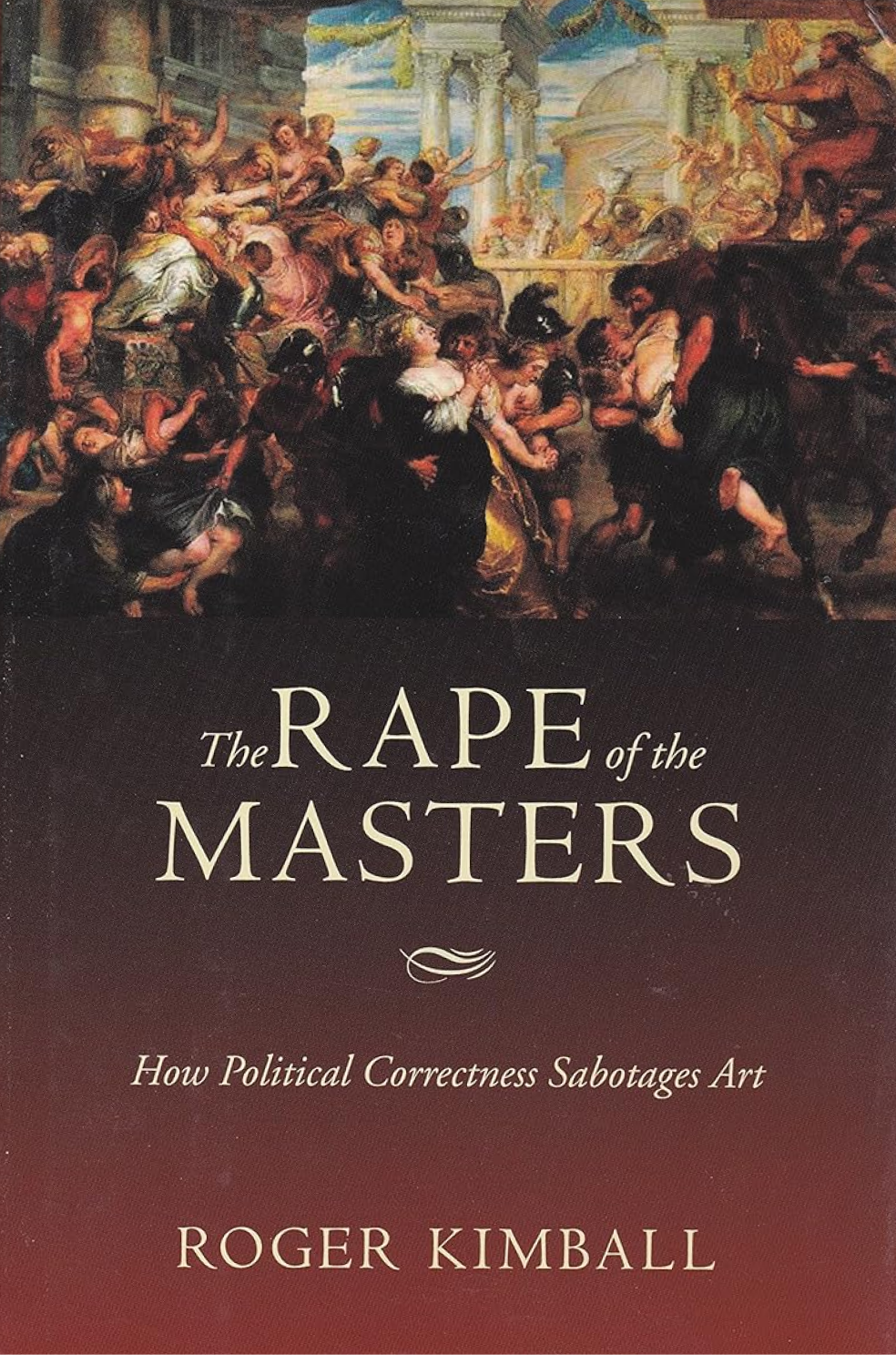
  • The Rape of the Masters

    How Political Correctness Sabotages Art

    Encounter Books, 2005

    Colleges and universities used to teach art history to encourage connoisseurship and acquaint students with the riches of our artistic heritage. But now, as Roger Kimball reveals in this witty and provocative book, the student is less likely to learn about the aesthetics of masterworks than to be told, for instance, that Peter Paul Rubens’ great painting Drunken Silenus is an allegory about anal rape. Or that Courbet’s famous hunting pictures are psychodramas about “castration anxiety.” Or that Gauguin’s Manao tupapau is an example of the way repression is “written on the bodies of women.” Or that Jan van Eyck’s masterful Arnolfini Portrait is about “middle-class deceptions … and the treatment of women.” Or that Mark Rothko’s abstract White Band (Number 27) “parallels the pictorial structure of a pieta.” Or that Winslow Homer’s The Gulf Stream is “a visual encoding of racism.”

    In “The Rape of the Masters: How Political Correctness Sabotages Art,” Kimball, a noted art critic himself, shows how academic art history is increasingly held hostage to radical cultural politics–feminism, cultural studies, postcolonial studies, the whole armory of academic antihumanism. To make his point, he describes how eight famous works of art (reprinted here as illustrations) have been made over to fit a radical ideological fantasy. Kimball then performs a series of intellectual rescue operations, explaining how these great works should be understood through a series of illuminating readings in which art, not politics, guides the discussion.

    “The Rape of the Masters” exposes the charlatanry that fuels much academic art history and leaks into the art world generally, affecting galleries, museums and catalogues. It also provides an engaging antidote to the tendentious, politically motivated assaults on our treasured sources of culture and civilization.
    Read More
  • The Survival of Culture

    Permanent Values in a Virtual Age

    Ivan R. Dee, 2002

    Ten distinguished critics reflect on the direction of our society, emphasizing both the dangers that threaten our institutions and the vivifying survivals that are worthy of being cherished and nurtured. Contributors include Robert H. Bork, Anthony Daniels, Roger Kimball, Hilton Kramer, Kenneth Minogue, Eric Ormsby, David Pryce-Jones, Diana Schaub, Mark Steyn, and Keith Windschuttle.

    Read More
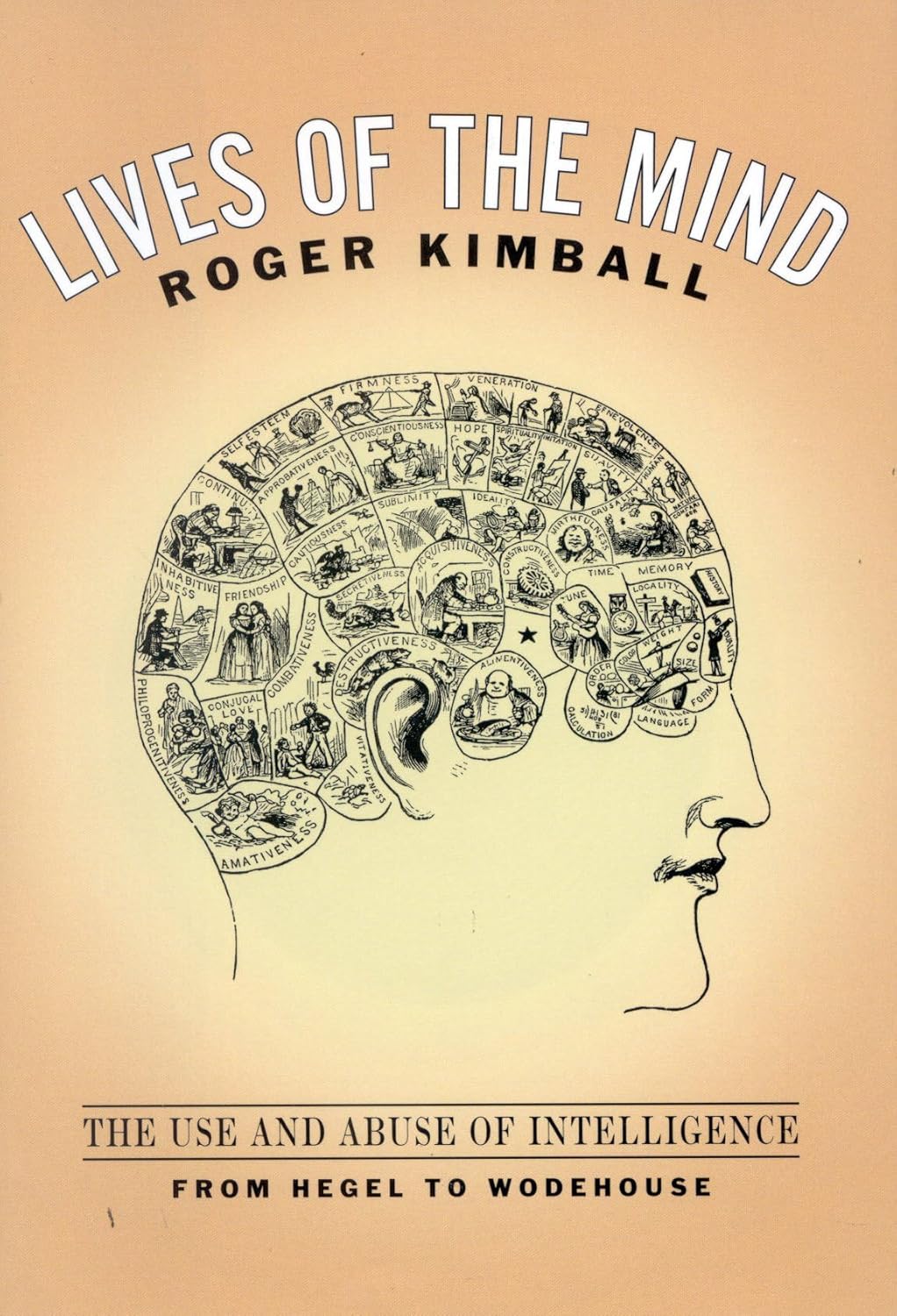
  • Lives of the Mind

    The Use and Abuse of Intelligence from Hegel to Wodehouse

    Ivan R. Dee, 2002

    Mr. Kimball, one of the best of our cultural critics, offers a lively and penetrating study of genius―and pseudo-genius―at work, and investigates the use and abuse of intelligence. Drawing on figures as various as Plutarch and Hegel, Kierkegaard and P.G. Wodehouse, Elias Canetti and Anthony Trollope, he provides a sharply observed tour of Western intellectual and artistic aspiration. A master of the genre, as collections of his pieces attest, none more impressively than this set. ―Booklist Starred Review

    Read More
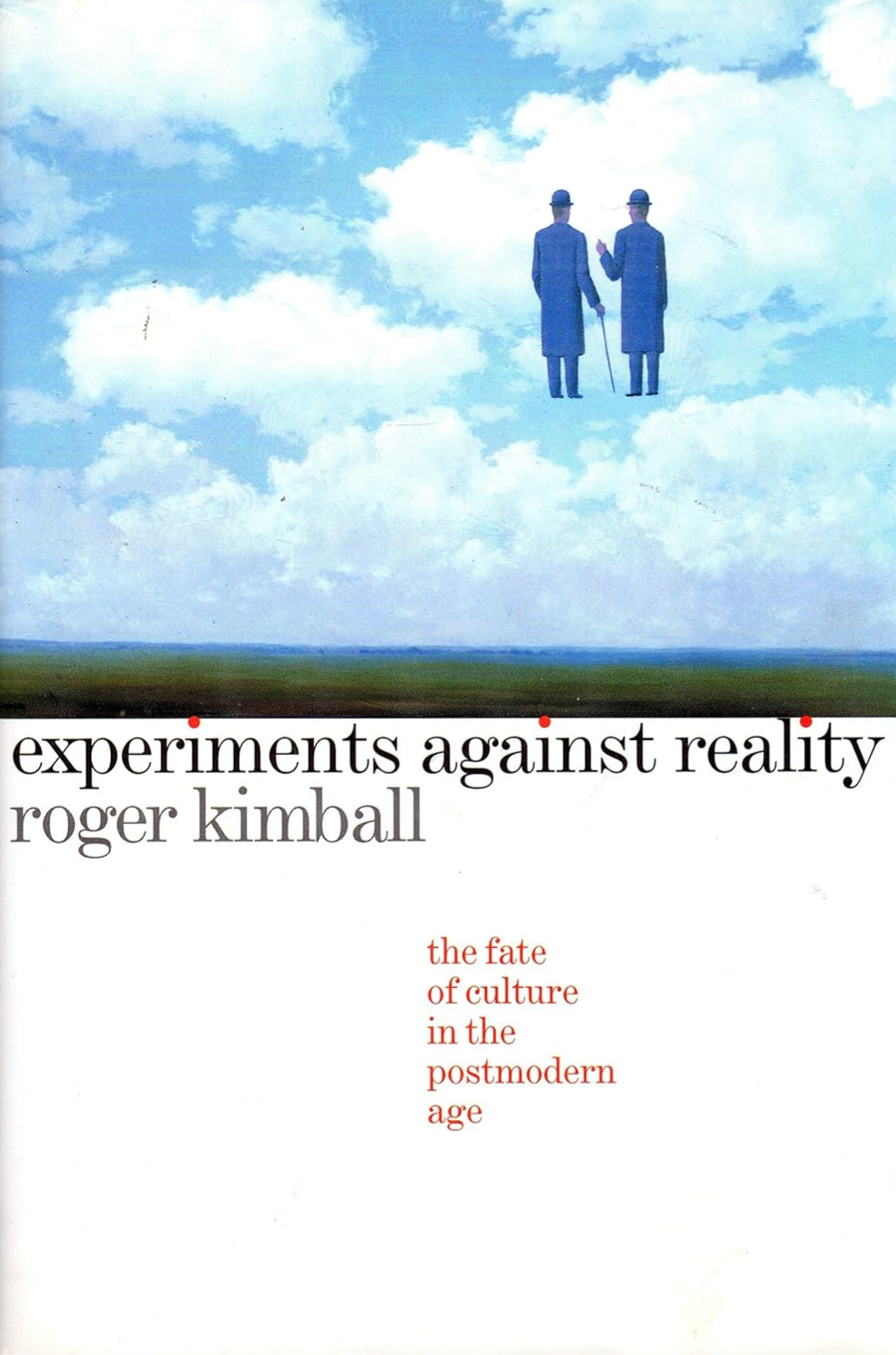
  • Experiments Against Reality

    The Fate of Culture in the Postmodern Age

    Ivan R. Dee, 2000

    Experiments Against Reality displays the sophistication, breadth of knowledge, and clarity of argument that have made Mr. Kimball one of the most trenchant critics of our contemporary culture. He begins by considering the influential poet and theorist T. E. Hulme, and shows how the work of Eliot, Auden, Wallace Stevens, Robert Musil, Elias Canetti, and others can be seen as efforts to articulate a convincing alternative to the intellectual and spiritual desolations of the age. Turning to the philosophical tradition, Mr. Kimball suggests how figures from Mill and Nietzsche to Bertrand Russell, Wittgenstein, Sartre, Heidegger, Foucault, and Roger Scruton have addressed—or in many cases evaded—the defining moral imperatives of modernity. Finally, he steps back to consider more generally the career of contemporary culture—the trivializing nature of the contemporary art world; the academic attack on historical truth and scientific rationality; the fate of the two cultures controversy. Experiments Against Reality offers continuing evidence of Mr. Kimball’s stature as one of our most important cultural critics. Named an International Book of the Year by Mary Lefkowitz, Times Literary Supplement. A scathing critic but one whose tirades are usually justified…. His intellectual rigor is refreshing. Experiments Against Reality demonstrates what criticism can be if you take away all the theoretical scaffolding inherent in, say, a deconstructionist, structuralist or feminist reading. —Catherine Saint Louis, New York Times Book Review

    Read More
  • Against the Idols of the Age

    Edited by Roger Kimball

    Routledge, 2001

    Little known outside his native Australia, David Stove was one of the most illuminating and brilliant philosophical essayists of the postwar era. A fearless at-tacker of intellectual and cultural orthodoxies, Stove left powerful critiques of scientific irrationalism, Darwinian theories of human behavior, and philosophic idealism. He was also an occasional essayist of considerable charm and polemical snap. Stove’s writing is both rigorous and immensely readable. It is, in the words of Roger Kimball, “an invigorating blend of analytic lucidity, mordant humor, and an amount of common sense too great to be called ‘common.’” Against the Idols of the Age brings together a representative selection of Stove’s writing and is an ideal introduction to his work. The book opens with some of Stove’s most important attacks on irrationalism in the philosophy of science. He exposes the roots of this fashionable attitude, tracing it through writers like Paul Feyerabend and Thomas Kuhn to Karl Popper. Stove was a born controversialist, so it is not surprising that when he turned his attention to contemporary affairs he said things that are politically incorrect. The topical essays that make up the second part of the book show Stove at his most withering and combative. Whether the subject is race, feminism, the Enlightenment, or the demand for “non-coercive philosophy,” Stove is on the mark with a battery of impressive arguments expressed in sharp, uncompromising prose. Against the Idols of the Age concludes with a generous sampling of his blistering attacks on Darwinism. David Stove’s writings are an undiscovered treasure. Although readers may disagree with some of his opinions, they will find it difficult to dismiss his razor-sharp arguments. Against the Idols of the Age is the first book to make the full range of this important thinker available to the general reader.

    Read More
  • The Long March

    The Long March: How the Cultural Revolution of the 1960s Changed America

    Encounter Books, 2001

    In The Long March, Roger Kimball, the author of Tenured Radicals, shows how the “cultural revolution” of the 1960s and ’70s took hold in America, lodging in our hearts and minds, and affecting our innermost assumptions about what counts as the good life. Kimball believes that the counterculture transformed high culture as well as our everyday life in terms of attitudes toward self and country, sex and drugs, and manners and morality. Believing that this dramatic change “cannot be understood apart from the seductive personalities who articulated its goals,” he intersperses his argument with incisive portraits of the life and thought of Allen Ginsberg, Norman Mailer, Timothy Leary, Susan Sontag, Eldridge Cleaver and other “cultural revolutionaries” who made their mark. For all that has been written about the counterculture, until now there has not been a chronicle of how this revolutionary movement succeeded and how its ideas helped provoke today’s “culture wars.” The Long March fills this gap with a compelling and well-informed narrative that is sure to provoke discussion and debate.

    Read More
  • The Betrayal of Liberalism

    How the Disciples of Freedom and Equality Helped Foster the Illiberal Politics of Coercion and Control

    Ivan R. Dee, 1999

    Just fifty years ago the literary critic Lionel Trilling spoke of liberalism as “not only the dominant but even the sole intellectual tradition” in American society. At the turn of the twentieth century, this is clearly no longer the case, when conservative ideas have succeeded in many areas of public policy. Yet America’s mainstream institutions—the media, the academy, popular culture, religion, the law—remain largely under the sway of a liberal ethos. In this incisive collection of essays which appeared originally in The New Criterion, nine distinguished critics and observers examine the origins and prospects of liberalism, from its roots in thinkers such as Rousseau and Mill to its troubled legacy in twentieth-century pursuits. They are cogent in explaining the compromising effects of liberalism in the moral and intellectual life of our culture, and seek to disentangle what is beneficent from what is destructive in its ideas. At a time when basic liberal assumptions about man and society are so deeply entrenched that they go largely unrecognized—and unexamined—The Betrayal of Liberalism offers a rewarding and enriching analysis. Its contributors include Roger Scruton, Keith Windschuttle, Hadley Arkes, Robert Conquest, Jean Bethke Elshtain, Robert Kagan, John Silber, John O’Sullivan, Hilton Kramer, and Roger Kimball.

    Read More
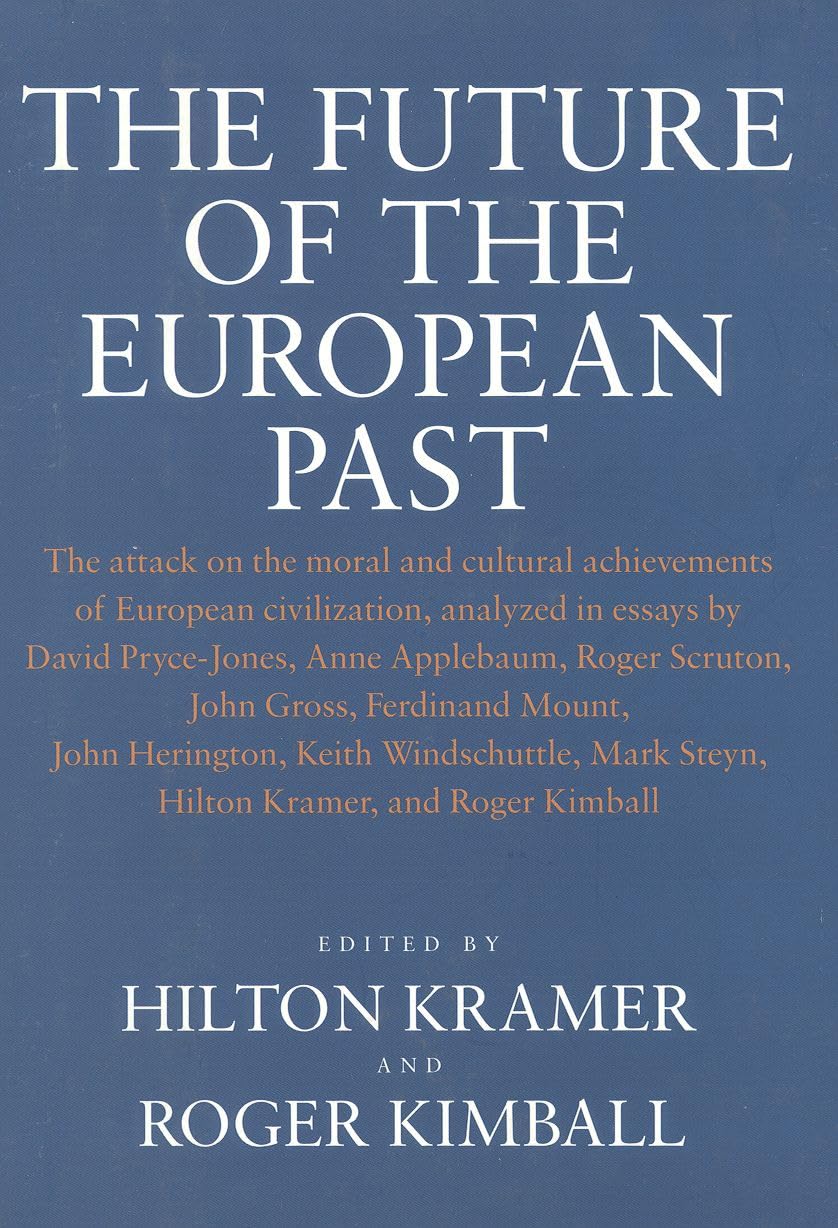
  • The Future of the European Past

    The attack on the moral and cultural achievements of European civilization, analyzed in essays by David Pryce-Jones, Anne Applebaum, Roger Scruton, John Gross, Ferdinand Mount, John Herington, Keith Windschuttle, Mark Steyn, Hilton Kramer, and Roger Kimball

    Ivan R.Dee, 1997

    It is no longer news that the history of the European past and its role in shaping American cultural life is under severe attack. In virtually every university that offers a liberal arts curriculum, in every arts institution that deals with European classics, in the offices of every publication that engages in intellectual pursuits, the discussion of the past has become the principal battleground for mapping out the future of our culture. In this provocative and insightful collection of essays first published in The New Criterion, ten distinguished critics reflect on the fate of Europe’s cultural and political legacy as we approach the turn of the century. On subjects ranging from the collapse of communism and its implications for European society, to the study of the classics, to the prospects for serious music and art, these essays offer analyses marked by wit, independence, and commanding intelligence. The contributors include David Pryce-Jones, Anne Applebaum, Roger Scruton, John Gross, Ferdinand Mount, John Herington, Keith Windschuttle, Mark Steyn, Hilton Kramer, and Roger Kimball. The Future of the European Past is a major contribution to the debate over some of the most pressing cultural issues of our time.

    Read More
  • Against the Grain

    Against the Grain: The New Criterion on Art and Intellect at the End of the 20th Century

    Ivan R. Dee, 1995

    An abundant selection of incisive writings from The New Criterion, the magazine that has emerged as the foremost voice of critical dissent in the culture wars. No one who reads this volume can be in any doubt what the cultural war in the U.S. is all about, or who ought to win it. —Paul Johnson, Wall Street Journal

    Read More